Drilling Down into Oil and Gas Prices
Casey Research Summit Special Report Part II: Drilling Down into Oil and Gas Prices
The private panel that began with three key speakers at the April 27-29 Casey Research Recovery Reality Check Summit continues with a second installment in today’s Energy Report. This exclusive features Casey Energy Opportunities Senior Editor Marin Katusa, Global Resource Investments Founder and Chairman Rick Rule and Casey Research Senior Editor Louis James, turning their attention to oil and natural gas prices and opportunities in equities.
Source: Karen Roche and JT Long of The Energy Report (5/10/12)
The Energy Report: Since we last talked in November, oil went from $90–110 per barrel (bbl). Has it established a floor that will stick? Or, as Porter Stansberry predicted during the summit, is it getting ready to crash? He said that using the same sorts of technology that brought on the glut of natural gas will lead to finding too much oil and driving its price down.
Marin Katusa: Porter was basing his comments on the success of shale gas in North America, and with that you have natural gas liquids and some oil. In North America, gas became a victim of its own success, worsened by a warmer-than-expected winter. But understand that gas, in general, has very localized markets.
When it comes to the oil sector, people think Exxon Mobil Corp. (XOM:NYSE); Royal Dutch Shell Plc (RDS.NYSE.A/B) and ConocoPhillips (COP:NYSE) are the biggest players. The big players are actually the national oil companies (NOCs)—Saudi Aramco, Petróleos Mexicanos (Pemex) and Petróleos de Venezuela, which are not reinvesting in operations and exploration. Their production is decreasing as a result. Cantarell, in Mexico, is one of the greatest oilfields in the world, but it’s decreasing by 3.5% every year. The NOCs are distributing profits to fund massive social programs. For instance, more than 55% of Venezuela profits from oil-funded social programs.
By the way, America imports more than a million barrels of Venezuelan oil each day and pays a premium over what it pays for domestic oil. But that’s another story.
I don’t necessarily agree that the same reasons why natural gas in North America went under $2 per thousand cubic feet (Mcf) would apply globally. India is signing $14–$15/Mcf and more; Japan is at $15/Mcf-plus. It’s twice that in Europe. So North America is a unique case; the rest of the world is nowhere near that when it comes to shale exploration.
TER: Will that change when the U.S. starts exporting in 2015 or so? Continue reading
Amir Adnani: Post-Fukushima Uranium
By Admir Adnani, Casey Research
Demand for electricity has tripled worldwide over the last three decades… so is there still a future for uranium?
To see the video… Continue reading
Natgas Down, Opportunity Up
By Marin Katusa, Chief Energy Investment Strategist, Casey Research
The energy market is a complex beast, its many parts interconnected through a multitude of linkages. When one part fails, the entire system reacts: certain linkages are burdened with extra stress, while other components sit idle. Only by studying the entire machine can one understand the rippling effects that stem from one change.
With the energy market, the system is made up of various sectors – oil, natural gas, uranium, coal, and alternative energies – and the countries that have each of those energy resources. The components are then linked through a long line of forces, including the geographic distributions of supply and demand, international allegiances and trade deals, global markets and commodity prices, and the ever-evolving field of international relations. A change in any country, sector, or linkage resonates through the entire system.
From this perspective, North America’s shale gas revolution truly earns its accolade as a “game changer.” As many people now understand, the boom in natural gas reserves and production in the United States and Canada is changing the way North America will power itself in the future.
What a lot of people do not understand is how to profit from this shift. Continue reading
Nuclear Energy Trends- Germany
Germany – It’s Not Easy Being Green
Forty-one years ago on Sesame Street, Kermit the frog sang a plaintive song, “It’s not easy being green.” In a gesture of solidarity, perhaps he should fax the lyrics to German Chancellor Angela Merkel, whose government is suddenly discovering the costs of weaning itself off nuclear energy.
In the wake of Fukushima, German Chancellor Angela Merkel announced on 30 May that Germany, the world’s fourth-largest economy and Europe’s biggest, would become the first Continue reading
Doug Casey: Glowing Prospects for Uranium
On September 22, 2011, Karen Roche and JT Long of The Energy Report interviewed renowned speculator and financial author Doug Casey on his views about uranium. Read here why Doug thinks despite the recent bad press, “yellowcake” has a bright future.
The Western world’s skittishness, skepticism and staunch opposition when in comes to nuclear energy won’t stand in the way of its production elsewhere in the world. It will be full steam ahead in China, India and other developing nations, says Casey Research Chairman Doug Casey, and the Western world is tiny in comparison. In fact, “I’d say uranium is a great place to be for at least the next generation,” he tells us in this Energy Report exclusive. With ever-advancing technology enabling economic recovery in places where it previously wasn’t possible, he’s also optimistic about natural gas and oil. Continue reading
Glow at the End of the Tunnel
By Elizabeth Manning, Casey Energy Opportunities
Nuclear energy has taken a beating since the Fukushima crisis began in March, but we believe the arguments are strong that it’s not down for the count.
There are a couple of factors that the Casey Energy Team considers bullish for the nuclear industry and market. Let’s take a closer look and back them up.
Factor #1: The pre-Fukushima price of uranium reflected not just market perception but a very real shortage of uranium that’s looming in the face of growing global demand.
The Japanese earthquake struck just as the nuclear renaissance was gaining momentum. After a decade, efforts by the industry to promote nuclear power as a safe, clean and reliable alternative to fossil fuels were finally taking hold. So was the message that nuclear power offers the “always on” type of electricity that other, more glamorous low-carbon technologies like solar and wind power could only supplement, not replace. Continue reading
Solar Energy in Uzbekistan
In a wierd twist of fate, Uzbekistan is sitting on a “Gold Mine” of scientific information about solar energy which because of cheap Siberian Oil has been totally worthless… Up until now. With the world’s interest turning to Solar once again this might be an opportunity for a forward looking company to snap up years of government funded research for a “song”. In this article John Daly tells us how this anomally came about. Tim McMahon~editor
Uzbekistan’s Untapped Solar Energy Riches
By: John C.K. Daly of OilPrice.com
The 17th century English philosopher, Francis Bacon, once observed that, “knowledge is power.
So, here’s some power knowledge that the West has overlooked, but may well contain critical information for jumpstarting Western interest in solar power. Continue reading
Natural Gas Trends
It seems that everywhere we look these days- from U.S. shale to massive Turkmenistan reserves- natural gas seems to be the energy source of the future.
Back in 2006 Turkmenistan claimed to have found a field of up to 24 Trillion Cubic Meters of natural gas. At the time BP was saying that the reserves were probably less than 1/10th the amount. Since then the Chinese have been nailing down reserves left and right and it appears that these reserves may be twice as large as originally thought. Unfortunately, the U.S. has been woefully slow to catch on to the Chinese game.
But recently Hillary Clinton got around to sending an envoy to Turkmenistan trying to catch up with the Chinese. See the full report by Dr. Daly from OilPrice.com.
Continue reading
How Shale Gas Might Transform the Energy Markets
By Marin Katusa, Casey Energy Report
In the midst of roller-coaster oil prices and a global reassessment of nuclear power, in early April a key development in the natural gas arena slipped by mostly unnoticed: a report from the U.S. Energy Information Administration (EIA) about global shale gas potential.
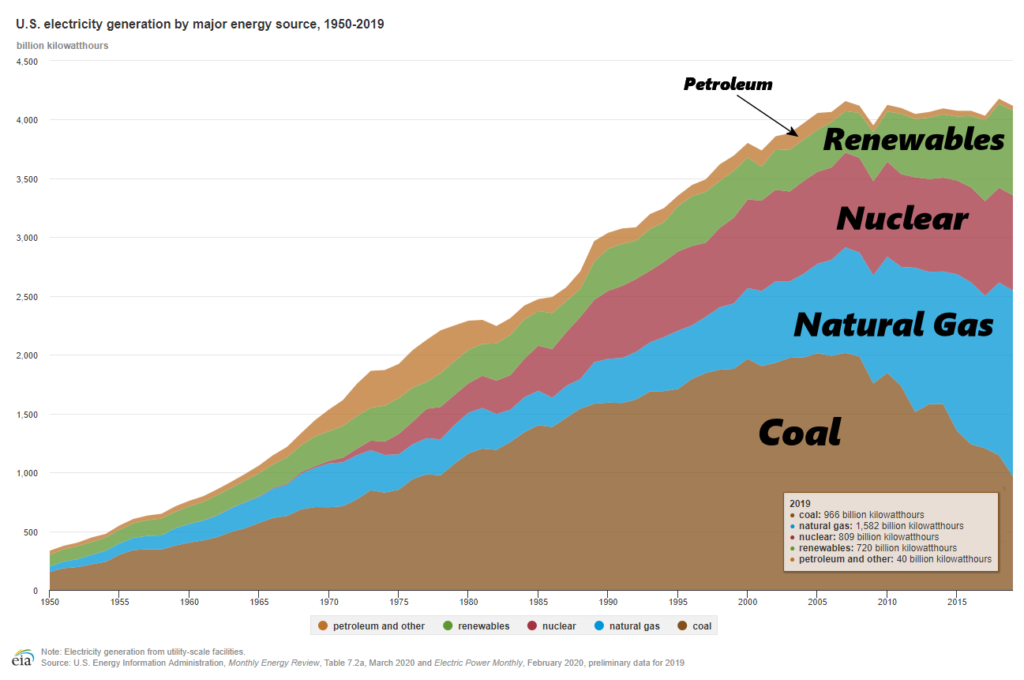
We all know that shale gas discoveries in America have altered the country’s gas picture dramatically – a twelvefold increase in production over the last decade has transformed the U.S. from an importer to a self-sufficient, natural-gas-loving nation, while also pushing natural gas prices way down. U.S. shale gas production increased by an average of 48% a year from 2006 to 2010, and output is expected to rise almost threefold between 2009 and 2035, according to the EIA’s latest Annual Energy Outlook.
In the face of such impressive shale success in America, many began to wonder about shale gas potential in other parts of the world. In response, the EIA commissioned a report estimating the global volume of shale gas outside of the United States, and the results are, well, a bit mind-boggling. Continue reading


_20110820213338.jpg)