Candlestick Patterns
If you are a trader and if you don’t know how to read candlestick charts, you are missing a lot of profitable trades. Candlestick charting is a must tool in the arsenal of any trader. No matter what you trade whether it is stocks, forex, futures, options or whatever, you need to master candlestick charts and candlestick patterns. When you combine these candlestick patterns with technical indicators, you have a highly powerful combination . Master these Candlestick Patterns with this 82 page FREE Candlestick Guide . Get these 3 great End of Day Swing Trading Systems FREE . Download the 1 Minute Forex Trading System FREE that makes money anytime instantly. Continue reading
Use The Same Trading Principles That Major Banks And Hedge Fund Managers Use Everyday To Make Millions!
By Adam Hewison
Legendary hedge fund trader George Soros made $1 billion dollars in the British Pound shortly after my book on foreign exchange was published.
Coincidence? Maybe, but you decide.
Hello, my name is Adam Hewison and 20 years ago when my book “RIGHT ON THE MONEY: The definitive guide to forecasting foreign exchange rates,” was first published, it was a huge hit with bank and hedge fund traders.
One hedge fund trader by the name of George Soros, who may have read my book, made a cool billion dollars in profits in the British Pound in 1992.
This was not a one off event. Banks and hedge fund traders regularly make millions of dollars every year in forex trading.
IT’S NOT JUST ABOUT FOREX Continue reading
What are you really selling or buying in the currency market?
The short answer is nothing. The retail FX market is purely a speculative market. No physical exchange of currencies ever takes place. All trades exist simply as computer entries and are netted out depending on market price. For dollar-denominated accounts, all profits or losses are calculated in dollars and recorded as such on the trader’s account.
The primary reason the FX market exists is to facilitate the exchange of one currency into another for multinational corporations who need to trade currencies continually (for example, for payroll, payment for costs of goods and services from foreign vendors, and merger and acquisition activity). However, these day-to-day corporate needs comprise only about 20% of the market volume. Fully 80% of trades in the currency market are speculative in nature, put on by large financial institutions, multi-billion dollar hedge funds and even individuals who want to express their opinions on the economic and geopolitical events of the day.
Meaning of Trading in Pairs
Because currencies always trade in pairs, when a trader makes a trade he or she is always long one currency and short the other. For example, if a trader sells one standard lot (equivalent to 100,000 units) of EUR/USD, she would, in essence, have exchanged euros for dollars and would now be short euro and long dollars. To better understand this dynamic, let’s use a concrete example. If you went into an electronics store and purchased a computer for $1,000, what would you be doing? You would be exchanging your dollars for a computer. You would basically be short $1,000 and long 1 computer. The store would be long $1,000 but now short 1 computer in its inventory. The exact same principle applies to the FX market, except that no physical exchange takes place. While all transactions are simply computer entries, the consequences are no less real.
Great Returns in Currency Trading
The opportunities for unmatched returns and investment protection in the brave new world of foreign currency investing are second to none. In Foreign Currency Trading, financial executives Russell Wasendorf, Sr., and Russell Wasendorf, Jr., describe foreign currency trading in plain terms, and help you understand the risks, benefits, and operational requirements that you will need to take advantage of this market’s tremendous potential. Look to Foreign Currency Trading for clear explanations on the mechanics of foreign currency trading, in-depth discussion of all pertinent foreign exchange rules and regulations, and a comprehensive glossary with literally hundreds of terms essential to forex trading. With formerly imposing currency trading restrictions having been struck down in recent court rulings, the world of foreign currency trading is an exciting and rapidly-expanding field.
Do You Know Your Currency Pairs?
When I thought about some of the first things I learned before trading the Forex market, fundamental analysis came to mind. Fundamental analysis refers to factors that affect the price of a currency pair.
(Fundamental analysis of a business involves analyzing its financial statements and health, its management and competitive advantages, and its competitors and markets. When applied to futures and forex, it focuses on the overall state of the economy, interest rates, production, earnings, and management. While Technical analysis seeks to identify price patterns and trends in financial markets and attempt to exploit those patterns based primarily on price and volume. Technicians use various methods and tools based primarily on the belief that price charts include all know information about a market because this information is already factored into the price. ~editor).
It is important not only to perform technical analysis based on your charts and indicators, but to also be aware of the macroeconomic events that can affect a currency pair. What helped me in my forex education was learning each currency’s characteristics. Whichever pair or pairs you choose to trade, knowing each of their characteristics is extremely valuable because it aids in the accuracy of any trade you perform. Continue reading
Elliott Wave Forex Trading Video: It’s Not The News That Matters
By Jim Martens
How to apply the Elliott Wave to Forex Trading
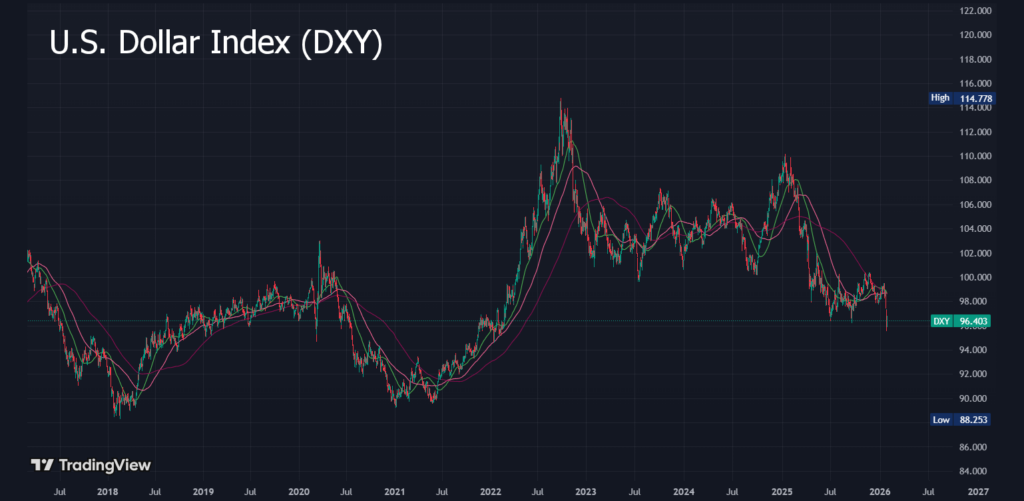
The standard explanation mainstream financial analysts and some forex trading “experts” use when talking about a market move is, “The market did that because of such-and-such news report.” But if you’ve been forex trading long enough, you know that all too often, the market’s reaction to the news is the opposite of what it’s “supposed” to be. In this video Elliott Wave International’s Senior Forex Trading Strategist, Jim Martens, explains that it’s not the news that matters when you’re trading forex — it’s the market’s reaction to the news that does — in this 10-minute forex trading video using the U.S. Dollar Index, Euro / Dollar and Dollar / Pound (cable) charts as examples Jim explains how he correlates Elliott Wave patterns to breaking news so he is prepared to capture the move in the right direction.
A Basic Guide To Forex Trading
Trading money in the global markets can be great way to make more of it, it can also be a lesson in how to lose money quickly. More than $1 trillion is traded every day on the foreign currency exchange (Forex), and yet no centralized headquarters or formal regulatory body exists for this form of trade. Foreign currency exchange is regulated through a patchwork of international agreements between countries, most of which have some type of regulatory agency that controls what goes on within their respective borders. Thus, the foreign currency exchange actually is a worldwide network of traders who are connected by telephone and computer screens. Continue reading
Forex – A Snappy Way To Make Serious Bucks
$1.3 Trillion; Safe estimates peg it as the amount of currency that’s traded on the Forex every single day.
Trading on the forex capital markets is one of the fastest growing income generating opportunities in the world. All it takes to start is a small investment (many dealers will start you off with as little as $250), and some knowledge of the world markets and of trading. Oh. And, according to those that do it every day and live off changing dollars to pounds to francs and back, some common sense, some practicality and a lot of faith are a big help.
Some background:
1. The market began in the 1970s with the introduction of free exchange rates and floating currencies. It’s the open market where the world’s currencies are exchanged and traded with few regulations. Because of the open nature of the market nearly anyone can trade and make money. The volume of trading and the enormous number of players make it almost impossible for any one trader to manipulate the market. Continue reading
What Should You Know About Forex Investing
Forex investing has several differences from the more common Stock market. The Stock market is based on the selling of stocks in companies, where as the Forex market is based on the pairings of foreign currencies. The Stock market often requires a long-term investment in a stock, waiting for changes in a positive fashion for your portfolio. Forex trading investing affords you the luxury of being involved a very short term, fluid market. A market that is open twenty-four hours each day, 5 days per week, worldwide.
While most who are investing in the stock market need a broker, Forex investing is mostly done on the internet with no broker being involved with you. This means you do not have to pay commissions on your trades like you may have to do in the Stock market. Investing in forex market can be done in several ways. If you are a novice trader and do not feel knowledgeable or perhaps you do not have the time to devote to the forex market, then you can obtain a Forex Managed Account and try Managed Forex Investing. Many people who wish to diversify their portfolio tend to use this option. This account is handled by a broker or firm with limited input from you. You have to sign a limited power of attorney to handle trades but the trader cannot withdraw or deposit funds into your account. There are fees involved in investing to a Managed Forex account. If you’re not comfortable using Forex managed accounts investing systems, start out simple by joining a Forex Investing Club. Check on-line for existing groups or perhaps one in your area, which you can meet similar persons interested in forex investments. Continue reading