Tim McMahon

Work by editor and author, Tim McMahon, has been featured in Bloomberg, CBS News, Wall Street Journal, Christian Science Monitor, Forbes, Washington Post, Drudge Report, The Atlantic, Business Insider, American Thinker, Lew Rockwell, Huffington Post, Rolling Stone, Oakland Press, Free Republic, Education World, Realty Trac, Reason, Coin News, and Council for Economic Education.

BTC 14 percent Crash

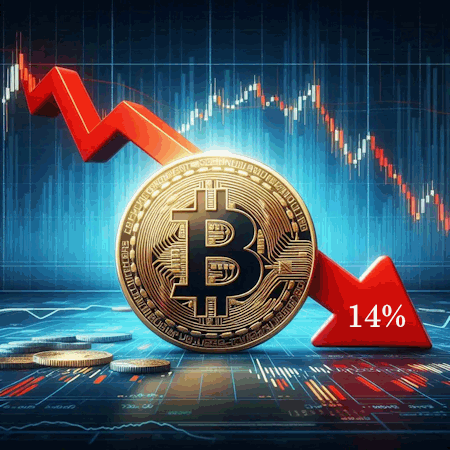
What Caused Bitcoin to Crash 14% in a Single Day?

A $43 billion mistake triggered massive sell orders, crashing Bitcoin 14% in minutes. Here’s how it happened. Bitcoin may be volatile, but it doesn’t usually drop 14% in a single day without a major macro shock, regulatory crackdown, or exchange hack. But this time, the trigger wasn’t a government ban or a cyberattack. It was something far more mundane — and far more embarrassing.

What Caused Bitcoin to Crash 14% in a Single Day? Read More »

Crypto Winter

Did the Crypto Bear Market Begin in October 2025? Or Earlier?

Discover why the crypto bear market may have started in January 2025, according to Bitwise CIO Matt Hougan. While many investors watched Bitcoin soar, hitting its all-time high (ATH) of $126,198 on October 5, 2025, underlying market weakness was quietly building. Retail-focused altcoins had already begun rolling over, and institutional inflows temporarily masked the downturn.
Hougan’s analysis contrasts with W.D. Gann’s principle that “time is more important than price”, highlighting that market cycles often shift before headline prices reflect them. Another key factor is the rise of “paper Bitcoin,” with ETFs and custodial products creating synthetic supply that could influence volatility and scarcity.
Understanding these dynamics is crucial for investors. Paying attention to time cycles, market sentiment, and actual on-chain supply can help you navigate bear markets, preserve capital, and identify long-term opportunities in crypto. Don’t just watch BTC price; watch the cycles beneath it.

Did the Crypto Bear Market Begin in October 2025? Or Earlier? Read More »

Why Greenland Matters: U.S. Strategy and Influence in the Arctic

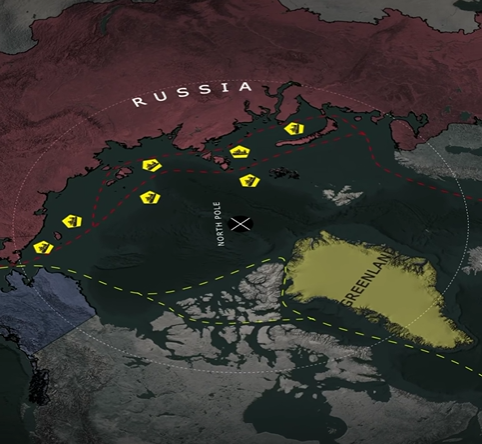
The strategic stakes in Greenland go far beyond theory. Thule Air Base already anchors U.S. missile warning, space surveillance, and Arctic defense, but across the Arctic, Russia has built approximately 32 “continuously attended military sites” including submarine bases, airfields, and radar stations, projecting power from its northern coast to remote islands. As Moscow expands its Arctic footprint and China eyes the region, Greenland’s value skyrockets. Securing it—or at least guaranteeing absolute alignment—gives the U.S. unmatched early-warning capability, protects key transatlantic routes, and locks NATO’s northern flank against emerging threats. In the Arctic, geography is power—and Greenland is the ultimate lever.

Why Greenland Matters: U.S. Strategy and Influence in the Arctic Read More »

Tether Dollarizing the World

Tether and GENIUS are Dollarizing the World

Tether (USDT) and other dollar-backed stablecoins are quietly strengthening U.S. dollar dominance even as governments talk about de-dollarization. Stablecoins act as digital dollars, giving people worldwide fast, bank-free access to dollar stability—especially in high-inflation and capital-controlled economies.

Because stablecoins are backed by short-term U.S. Treasury bills, global demand for digital dollars creates new demand for U.S. government debt at a time when traditional buyers are weakening. U.S. policy, i.e., the GENIUS Act, reinforced this by legitimizing stablecoins. Instead of replacing the dollar, stablecoins modernize it—shifting dollar hegemony from treaties and petrodollars to blockchain-based, market-driven adoption.

Tether and GENIUS are Dollarizing the World Read More »

Scroll to Top