Is Animal Testing about to become Obsolete?
By Chris Wood, Casey Research
As an analyst who spends a great deal of time researching biotech and pharma companies, I’m well aware of the challenges facing the drug industry in the US today. From onerous regulation and an approval process that has made drug development prohibitively costly and complex to the pending patent cliff that puts more than $35 billion in annual sales at risk to the apparent decline in innovation suggested by the steep drop in patent applications from big pharma – all portend an increasing inability to replenish shrinking pipelines with new products… i.e., to produce drugs that improve and save lives.
| Despite its techie name, “virtual R&D” actually refers to the way the process is directed and managed, relying mostly on outsourcing. The goal is to attain clinical proof of concept for a drug as efficiently as possible by building a lean core management team and outsourcing the bulk of the process. |
But the news is not all bad. Scientists and entrepreneurs (often one and the same) are fighting back. With computer-aided drug discovery, the rise of backyard biotech, and virtual R&D, developers are experimenting with numerous ways to cut costs and time from the arduous process. One new and particularly interesting effort in this area is a play on the well-known system-on-a-chip (SoC) technology from the world of computers, that can be described as human-organs-on-a-chip. I guess we can call it HOOC for short? Continue reading
Rare Earth Investment Update
By Jeff Clark, Casey Research
We’ve received a number of inquiries from Casey Research subscribers about our opinion on the current rare earth metals market. We have covered this topic previously, but this article, we’ll take a fresh look.
As a matter of a recap, rare earth elements (or REEs) is a generic name for 17 metals widely used mostly in high-technology devices, such as mobile phones, laptops, flat screen televisions, hybrid car batteries, lasers, optics, and military equipment. New uses for these metals are being constantly found, but more on that later.
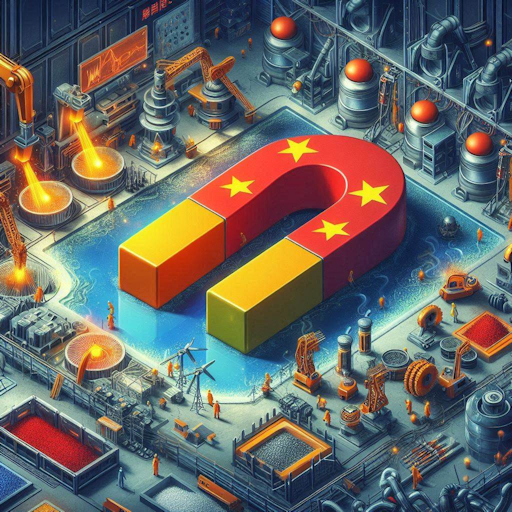
Despite the name, these metals are not actually rare in nature. The name refers to the fact that they are rarely found in a pure form and are usually mixed with other minerals, which makes extraction complicated and costly. Further, mining and refining of rare earth metals is environmentally challenging, due to acidic and radioactive byproducts. This is why most countries don’t produce REEs. This has led to a reduction in reserves of these metals and left the bulk of production to less environmentally conscious companies and jurisdictions. China has expanded its production and, at least on the surface, looks to have a near monopoly on the industry. According to the US Geological Survey, China possesses one-third of the world’s reserves and produces 97% of global supply.
None of this was a problem until China started introducing trade limits. Dramatic changes took place in 2010, when Beijing officially decided to cut export quotas on rare earths by 72%, to 35,000 tonnes, far below the levels of world consumption. Quotas were further reduced by 35% in the first half of 2011. Steep export taxes were applied, too. As a result, REE prices skyrocketed. Continue reading
The State of US Surveillance
By Doug Hornig, Casey Research
Lovers of liberty have seemingly had a good bit to celebrate recently.
First, there was an unprecedented outpouring of negative public sentiment about the Congressional bills SOPA (House) and PIPA (Senate); they are legislation that would have thrown a large governmental monkey wrench into the relatively smooth-running cogs of the Internet. Millions of Americans signed online petitions against the bills after seeing websites’ various protests. Google shrouded its search page in black; Wikipedia and Reddit went dark entirely (although Wikipedia could be accessed if one read the information available via clicking the sole link on its protest page); Facebook and Twitter urged users to contact their representatives; and many other core Internet businesses also raised their voices in opposition.
Such was the outpouring of dissent that even Washington, D.C. had to listen. The bills, which a week earlier had seem assured of swift passage, suddenly turned to poison. Supporters, forced to concede that the public really was pissed off this time, fled. Leadership in both houses tabled the legislation, pending further review and revision.
But before we get too self-congratulatory, however, it’s wise to note that this victory dish is probably best enjoyed with a serving of caution. As Casey Extraordinary Technology editor Alex Daley summed up the situation for us here at Casey Research: “Be sure this will come back again, likely post-election, and snuck through as part of a bigger package. It arrests power from the judiciary, and the legislature likes nothing more than to thumb its nose at those ridiculous judges and all their due process this and Constitution that. It will eventually pass, just not like this.” We can’t now go to sleep on this one. Continue reading
Fighting Cancer Ourselves
By Chris Wood, Casey Extraordinary Technology
Worldwide, tens of thousands of researchers are working feverishly on a cure for cancer, testing countless new drugs and dozens of novel approaches. Most will end up in the dustbin. But among the most promising of that small group likely to make it to market is a new type of monoclonal antibody therapy.
That may sound like a daunting scientific concept to try to wrap one’s head around, but in essence monoclonal antibodies are simple. Most of us are familiar with antibodies, the road warriors of the human body’s immune system. They’re those little Y-shaped proteins that are used to identify and neutralize foreign objects in the body (like bacteria and viruses) by binding themselves to the target – called an antigen – and killing it.
Although one antibody is generally very similar to another in structure, a small region at the tip of the protein is extremely variable – enough so that there are millions of distinct antibodies with slightly different tip structures, or antigen binding sites. This diversity allows the immune system both to recognize an equally wide variety of antigens and to come up with new responses to new types of infections. Continue reading
Next Step: A Home Cancer Test Kit?
By Doug Hornig, Casey Extraordinary Technology
With cancer, early detection equals a greater likelihood that treatment will have a positive outcome.
Physicians have known this for a long time, and the statistics back them up. Survival rates for those afflicted with many types of cancer have risen dramatically in the past few decades. And one of the primary reasons is that we are diagnosing cancer earlier and with much greater accuracy. Continue reading
Biometrics – Sci-Fi Becomes Reality
By Alex Daley, Casey Extraordinary Technology
For many years technology prognosticators have warned about the coming onslaught of “biometrics”: a fingerprint instead of one’s credit card at the ATM to draw cash, or a retinal scan at the border to verify one’s identity against one’s passport. Yet with decades of research and development behind the technologies, very few widespread uses of biometrics have found their way into our lives.
That is starting to change, however – and if the latest technology is any indication, you can probably expect a lot more biometrics in your life real soon.
When we think of technology, we often dream of the whiz-bang new capabilities it has brought to our lives, from ATMs to DVRs to smartphones. For a technology to go mainstream, first and foremost it generally has to also reduce someone’s “pain” – whether that be saving businesses money, or allowing an individual to conveniently catch his or her favorite program.
Ultimately, it usually comes down to the end user of a piece of technology who has to like the outcome before it will really catch on in a big way. Just because banks would prefer to save money with ATMs doesn’t mean customers will prefer them over live tellers. But put them in places where one can’t put a bank – like convenience stores and malls – and suddenly they are beneficial to both parties. That’s a recipe for widespread proliferation.
This is the problem that biometrics has suffered for decades: End users not only usually get little to no benefit, but they incur a significant perceived (and possibly actual) risk by using the system and giving up a digital copy of this highly personal identifiable information. Continue reading


_20110820213338.jpg)