Bitcoin Is Outgrowing Its Halving Cycle
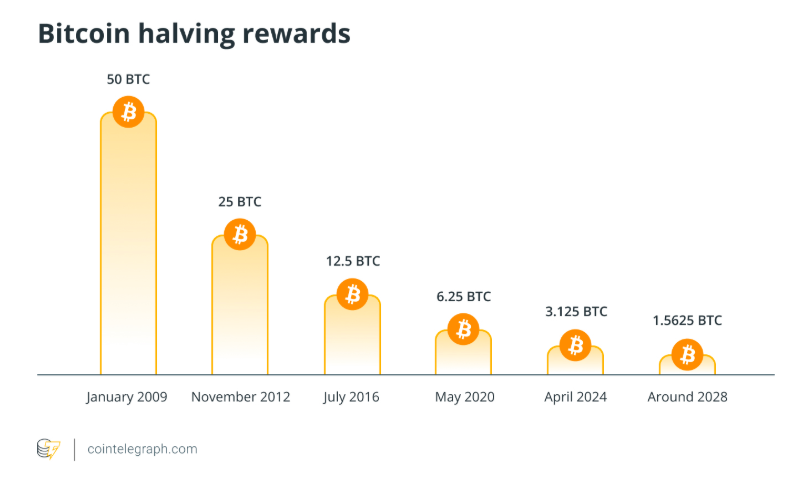
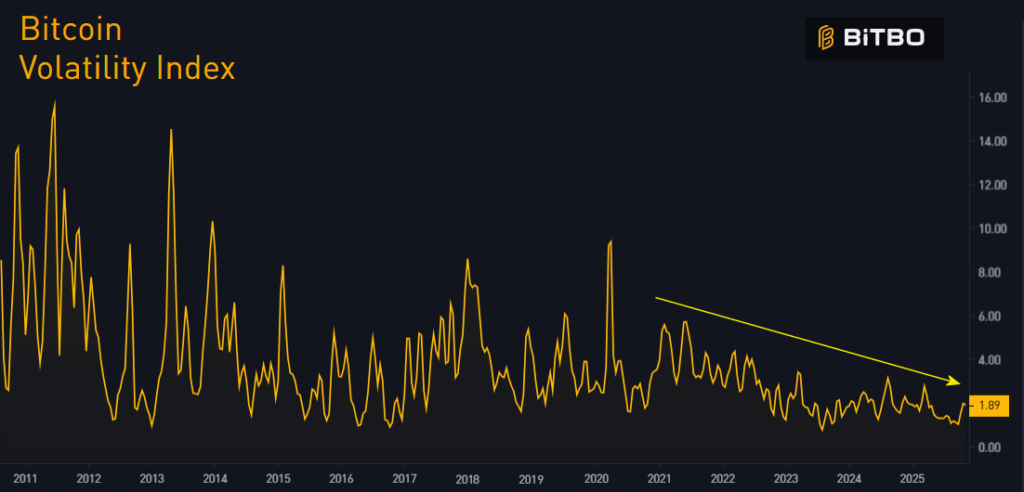
Bitcoin’s famous halving cycle is losing its grip on prices as institutional investors, ETFs, and lower volatility reshape the market.
Bitcoin Is Outgrowing Its Halving Cycle Read More »
Long-term trends grow from short term trends. We attampt to determine the short term trends and where they are pointing.
Bitcoin’s famous halving cycle is losing its grip on prices as institutional investors, ETFs, and lower volatility reshape the market.
Bitcoin Is Outgrowing Its Halving Cycle Read More »
Tether (USDT) and other dollar-backed stablecoins are quietly strengthening U.S. dollar dominance even as governments talk about de-dollarization. Stablecoins act as digital dollars, giving people worldwide fast, bank-free access to dollar stability—especially in high-inflation and capital-controlled economies.
Because stablecoins are backed by short-term U.S. Treasury bills, global demand for digital dollars creates new demand for U.S. government debt at a time when traditional buyers are weakening. U.S. policy, i.e., the GENIUS Act, reinforced this by legitimizing stablecoins. Instead of replacing the dollar, stablecoins modernize it—shifting dollar hegemony from treaties and petrodollars to blockchain-based, market-driven adoption.
Tether and GENIUS are Dollarizing the World Read More »
Many traders believe Bitcoin’s four-year cycle already peaked — but this wasn’t a blow-off top — it was a liquidity timeout. Fear is elevated, long-term holders are rotating, and fresh capital is building on-chain as stablecoin inflows hit record highs. Markets rarely end in fear. Instead of euphoria, we’re seeing uncertainty, liquidity constraints, and profit-taking from long-term holders. With billions in stablecoins waiting on the sidelines, the next major move may surprise the majority the cycle may have one more explosive leg.
Is This Really the End of the Bitcoin Bull Market? Read More »
Bitcoin isn’t broken — it’s maturing. Asset manager Jordi Visser calls it a “Silent IPO,” where early holders quietly distribute their positions to institutional buyers. Sideways trading isn’t weakness; it’s the market digesting supply and setting the stage for Bitcoin’s next major move.
BITCOIN’S “IPO PHASE” — A DIFFERENT KIND OF BREAKOUT Read More »
Piracy has taken on a new form in the 21st century. Instead of ships raiding trade routes, crypto piracy is gaining popularity, i.e., seizing digital wealth through covert operations on the blockchain. Some of these crypto pirates are individuals or small groups, while others are “state-sponsored”.
Pirates of the Crypto-ribbean Read More »
The U.S. Federal Housing Finance Agency (FHFA) has issued a directive that could make home financing easier. Fannie?Mae and Freddie?Mac are being asked to integrate cryptocurrency holdings into mortgage qualification metrics.
Trump Pushes Crypto for Mortgages Read More »
In recent years, stablecoins—cryptocurrencies pegged to a stable asset like the U.S. dollar—have emerged as powerful tools for fast, low-cost digital transactions. Now, imagine if giants like Amazon and Walmart began issuing their own branded stablecoins. These mega-retailers already sit at the crossroads of commerce, logistics, and digital innovation. Issuing a proprietary stablecoin could give them unprecedented control over payment systems, customer data, and even parts of the financial ecosystem. But such a move also raises thorny issues about competition, privacy, and monetary policy. Let’s explore the potential benefits and drawbacks of Amazon or Walmart entering the stablecoin game.
Amazon and Walmart Consider Issuing Their Own Stablecoins Read More »
If you’ve been keeping an eye on the housing market—or even just talking to friends about real estate—you’ve probably noticed things feel a lot different than they did a couple of years ago. In 2025, the U.S. housing market is cooling off after the wild ride it took during the pandemic. Prices are softening, inventory is growing, and—for the first time in a long while—there are actually more people looking to sell homes than there are buyers eager to snap them up. According to Stansberry Research and Redfin, sellers outnumber buyers by about 500,000.
The U.S. Housing Market in 2025: More Sellers Than Buyers Read More »
After spending months in the doldrums (and falling significantly) ETH rocketed 40.89% higher in the first week of May 2025. And a couple of weeks later, our ROC chart generated a Buy signal for ETH. ETH is still well below previous highs, so it could be an excellent buying opportunity. Despite making new all-time highs,
Although often confused and similar in function, there are drastic differences between Central Bank Digital Currencies (CBDC) and Stablecoins. In spite of both aiming to combine the convenience of digital payments with the stability of traditional fiat money, they have fundamental differences in issuer, backing, governance, and use cases.
CBDCs vs. Stablecoins: One Protects Your Wealth, One Threatens It Read More »