
 California is sliding toward an energy crisis years in the making. While global tensions in the Middle East have accelerated the problem, the roots of California’s energy emergency run much deeper — straight into Sacramento. Recently, Byron King of Paradigm Press analyzed the situation. Here is my summary of his conclusions. ~Tim McMahon, editor.
Once Self-Sufficient, Now Dangerously Dependent
It wasn’t always like this. As recently as the early 2000s, California produced most of its own crude oil, topped up by supplies piped down from Alaska and the occasional tanker from overseas. The state was largely energy self-reliant, and fuel prices — while never cheap — were at least predictable.
Back in the 1980s, California had 42 oil refineries, producing nearly all of the gasoline, diesel, and jet fuel that the state needed. Today? Just 7 remain. Two of those are technically “biodiesel” plants that convert things like used cooking oil into fuel — and they only stay open because of state subsidies and tax credits. Without that government support, they’d likely shut down too.
What happened to the other 35 refineries? Basically, they were regulated out of existence. So now, California’s refineries only cover about 40–50% of what the state needs.
A Self-Declared War on Oil
California has made no secret of its ambitions. The state has set a target of reaching full “net-zero” emissions by the mid-2030s, and that means phasing out the remaining refineries. There’s also a bit of an awkward irony here. California’s strict fuel standards, set by the California Air Resources Board, or CARB, are designed to keep the state’s air clean. But CARB’s authority stops at the state border. It has no say over the refineries in India or South Korea that produce California’s fuel, or the massive tankers that burn massive amounts of fuel oil as they cross the Pacific to deliver it. So while local production gets squeezed by environmental rules, the emissions just happen elsewhere, out of sight.
Imports are Drying Up
To make up for what it no longer produces at home, California has depended heavily on imported refined fuel. Despite its inefficiency, it worked… sort of. South Korea was supplying around 40% of California’s jet fuel. India was sending roughly 20% of its gasoline. And despite the war in Ukraine, a growing supply was coming in from Russia.
Along comes the war in the Strait of Hormuz, which disrupted tanker traffic. The crude that used to flow from the Persian Gulf to refineries in South Korea and India, and then to California, has been disrupted. Neither country is currently exporting fuel to California (or anywhere else… they need it at home).
California Can’t Just Plug Into the Rest of the U.S.
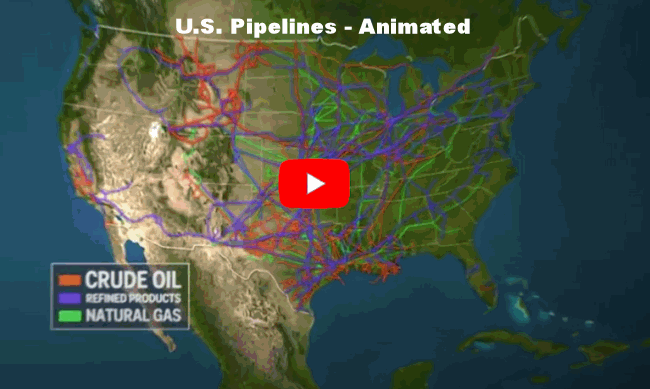 You might be wondering: why not just get more fuel from Texas or the Gulf Coast? It’s a fair question, and the answer gets to the heart of California’s unique vulnerability. As you can see from the video image, California has only a small number of pipelines connecting it to the rest of the U.S., primarily because of the Rocky Mountains. So, energy experts sometimes call California an “energy island.” Therefore, when imports fall short, rerouting the Midwest or Gulf Coast supply isn’t the quick fix to California’s energy crisis.
The Bill Is Coming Due
Californians already pay among the highest fuel prices in the nation due to their policies and massive gasoline usage taxes. As of January 1, 2026, state gasoline taxes averaged 33.5 cents per gallon across all states. The lowest state tax is Alaska, at 9.0 cents per gallon; the highest is California, at 70.9 cents per gallon. When you stack California’s state tax on top of the federal 18.4 cents, Golden State drivers are paying close to 90 cents per gallon in taxes alone, roughly double the national average before the actual cost of the fuel itself.
But the gap is about to widen. The supply crunch now materializing is not a natural disaster or an act of war visited upon California from the outside. It is the predictable consequence of policy choices made over decades — choices that prioritized regulatory ambition over energy security.
- The state chose to dismantle its refining base.
- It chose to restrict domestic production.
- It chose to depend on distant foreign suppliers without securing alternative supply chains or infrastructure.
Now the bill is coming due, and California’s drivers, airlines, and freight operators will be the ones paying for it, while politicians try to shift the blame.
You might also like:
- Energy Is Non-Fungible: Costing the World Billions
- Aluminum the Battery That Could Render Lithium Obsolete
- The Future of U.S. Energy Independence
- Is Gas Really More Expensive Than Ever?
- Ben Cowan: Is the Fed Heading Toward Checkmate?
Fintrend.com covers energy markets, commodity trends, and economic policy. This article reflects publicly available data and analysis as of the publication date.
