
Key Takeaways-
- The FED held interest rates steady
- Gold and Silver are up sharply
- The Dollar is Down
- Why Trump might want a weaker Dollar
- How a weaker Dollar affects you
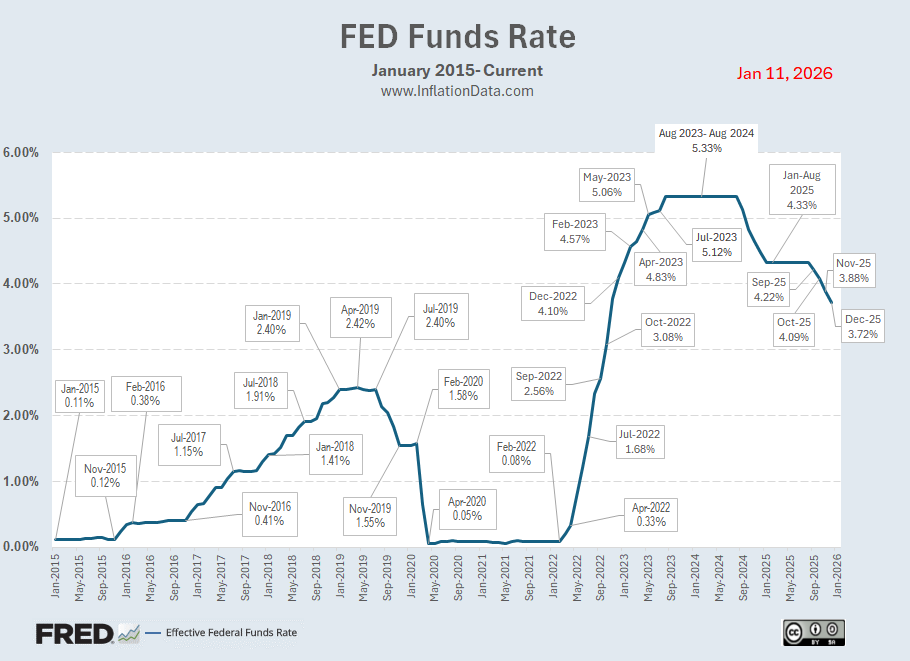
The FED held interest rates steady in the range of 3.5% to 3.75% that they set on December 10th. One reason FED Chairman Powell gave for not lowering further was that Inflation remains “somewhat elevated.” Two FED Governors dissented, voting in favor of another 0.25% cut. In the past, dissent has been strongly discouraged under the belief that presenting a “United Front” gave the market confidence that the FED actually knew what it was doing. This was not unexpected; markets were predicting a 97% chance that rates would remain unchanged. So, there was no panic on Wall Street.
The Big News
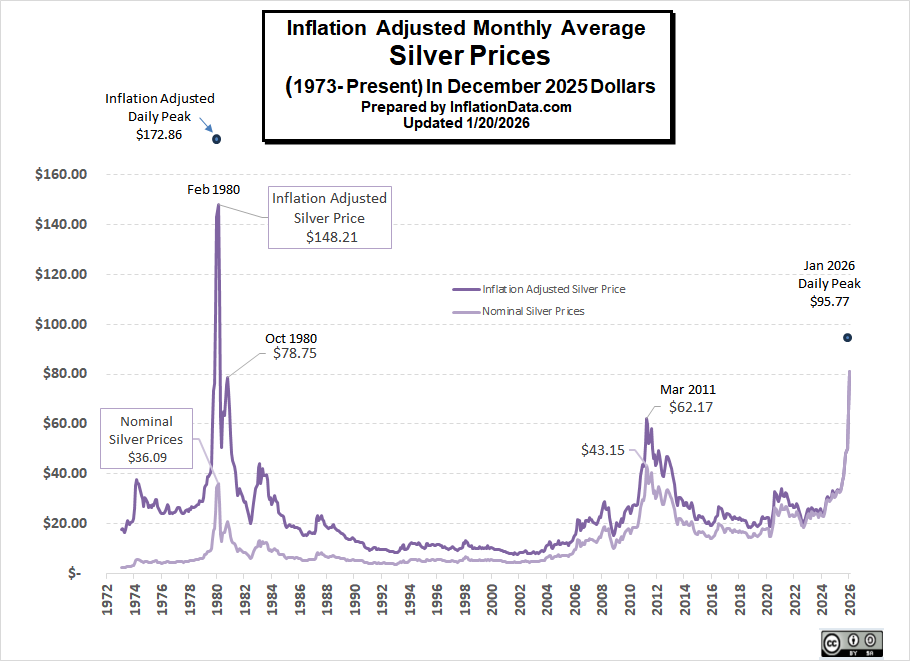
The big news was in the precious metals markets. Gold exploded 6% higher to a record high of over $5,400. Early on Thursday, Silver flirted with $122/oz. reaching a new all-time high in nominal terms and getting closer to Silver’s inflation-adjusted high of $172.86 that we wrote about. But of course, that peak was intraday (perhaps only a single trade). But we are getting very close to February 1980’s monthly average of $148.21, which proved unsustainable. As we can see from the chart below, even in inflation-adjusted terms, Silver spent most of the 1990s below $20. By 2002, silver was under $5 in nominal terms and under $10 in inflation-adjusted terms.
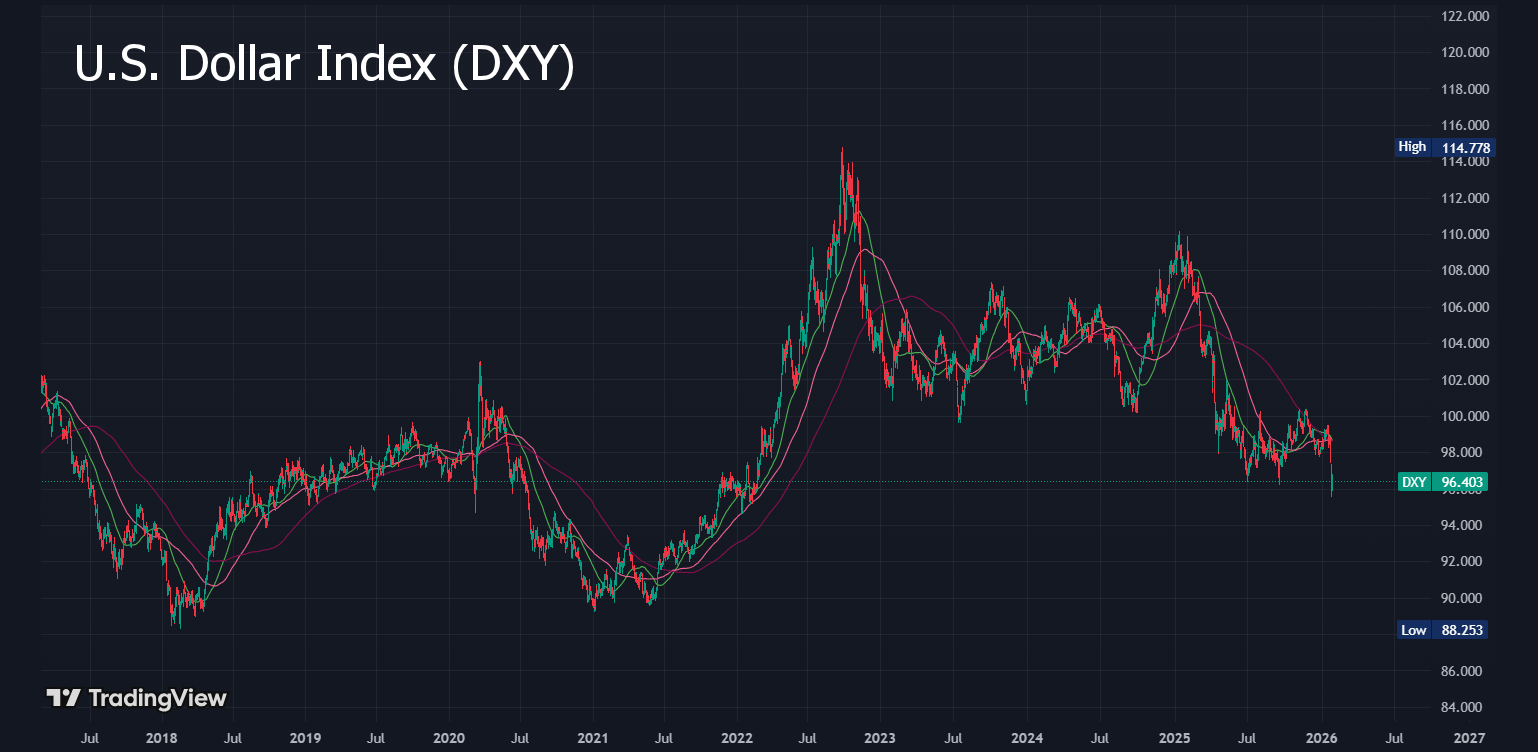
 The other big news of the day is the decline in the dollar. Some analysts believe that the weakening Dollar is taking the place of rate cuts and has been Trump’s “end-run” around the FED.
Why Would Trump Want a Cheaper Dollar?
- Boosts exports as they become cheaper to foreigners.
- Reduces the Trade Deficit.
- Government debt becomes easier to repay.
- Boosts the Stock Market
A weaker dollar makes U.S. goods cheaper for foreign buyers, which can help American factories, agriculture, and industrial exporters compete globally. Trump has tied this idea to his broader goal of shrinking the U.S. trade deficit and revitalizing manufacturing. The U.S. consistently imports more than it exports. Weakening the dollar, this makes imports more expensive (discouraging them) and makes exports cheaper (encouraging them), thus shrinking the trade deficit.
Trump’s rhetoric, i.e., calling the dollar’s value “great” while publicly tolerating its weakness, may signal a preference for a weaker currency. Such statements themselves can encourage markets to sell dollars and push the trade-weighted value down. Trump and some advisers argue that major trading partners like China manipulate their currencies to keep exports cheap and that the U.S. should not sit idly by with a relatively strong dollar, making U.S. goods more expensive on foreign markets.
As we can see from the chart below, after peaking at 99.48 on January 16th the Dollar fell sharply on January 23rd and 27th but stabilized at least temporarily, on January 28th and 29th. We tend to get blinded by recency bias, the Dollar is not as low as it was in 2018 or 2021 but it is coming off of highs in 2022 and early 2025.
How a Weaker Dollar Affects Us
Since oil is priced globally in dollars, when the dollar weakens, oil rises in dollar terms. This can result in higher gas prices. Other imported goods like electronics, clothing, appliances, and car parts become more expensive. A weakening dollar is considered inflationary. Travel abroad becomes more expensive. Savers lose, borrowers win… Savings lose purchasing power as inflation rises, but Fixed-rate debts (mortgages, government debt) become easier to repay in “cheaper dollars”.
Since cheaper dollars drive up asset prices, things like Gold, Silver, and Stocks rise in nominal terms but not always in inflation-adjusted terms. So, the government benefits from cheaper debt, the middle class benefits from cheaper mortgages, mitigated by higher food and energy prices, the wealthy benefit from higher asset prices, and the poor suffer from a higher cost of living.
Gold & Silver
Gold & Silver have been money for thousands of years. When confidence in paper currency drops:
- Investors buy gold as inflation protection
- Central banks increase gold reserves
- Gold prices (in dollars) usually rise
Gold tends to shine when:
- Real interest rates fall
- Inflation rises
- Currencies weaken
Long-Term Big Picture View
Looking at the “Big Picture” chart since 1973, we can see that we are almost exactly in the middle of the range between a high Dollar value and a low Dollar value.
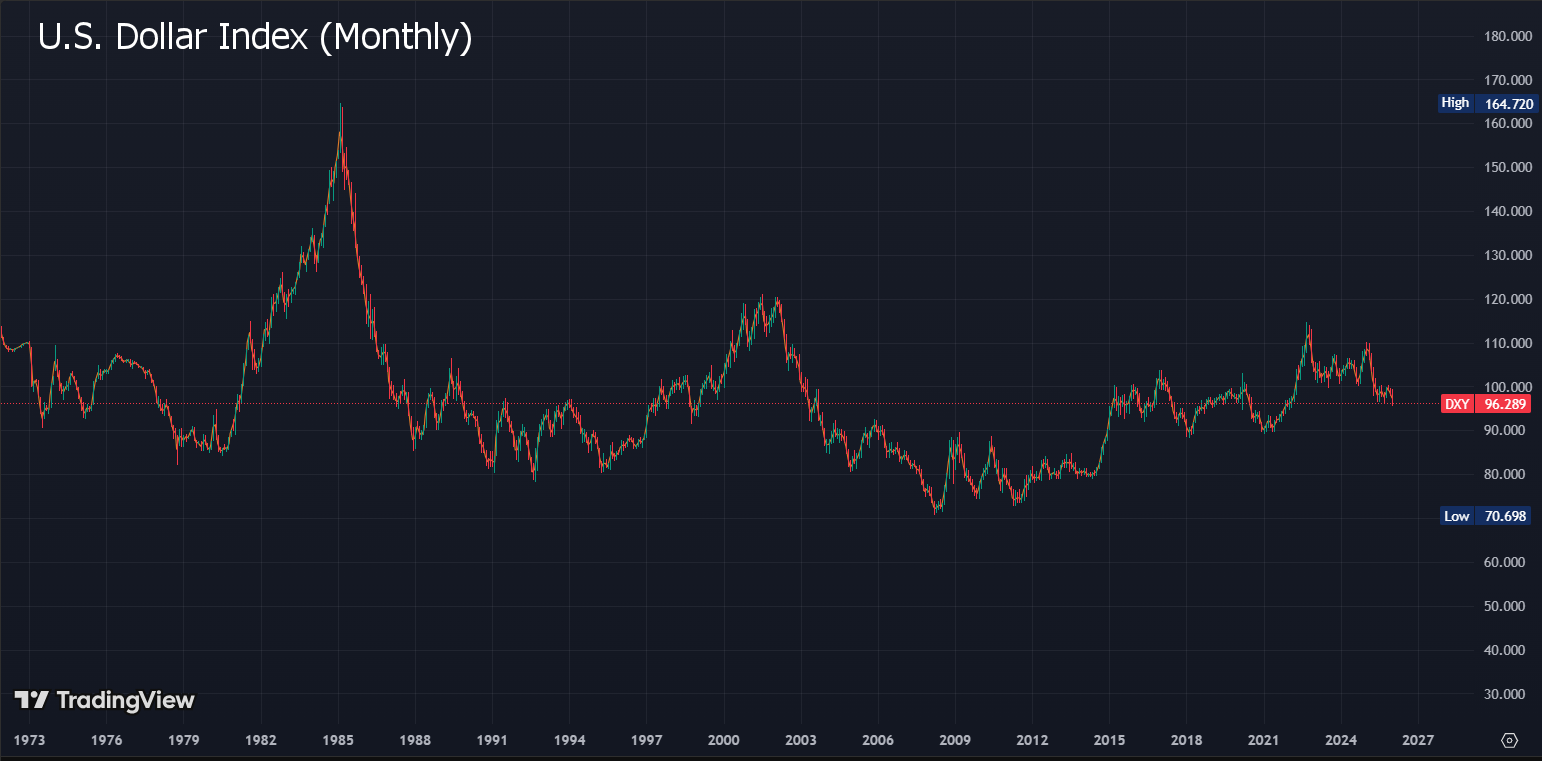 If you’d like to generate your own charts like this, you can get a FREE account at TradingView.
Sometimes you really do need to zoom out…
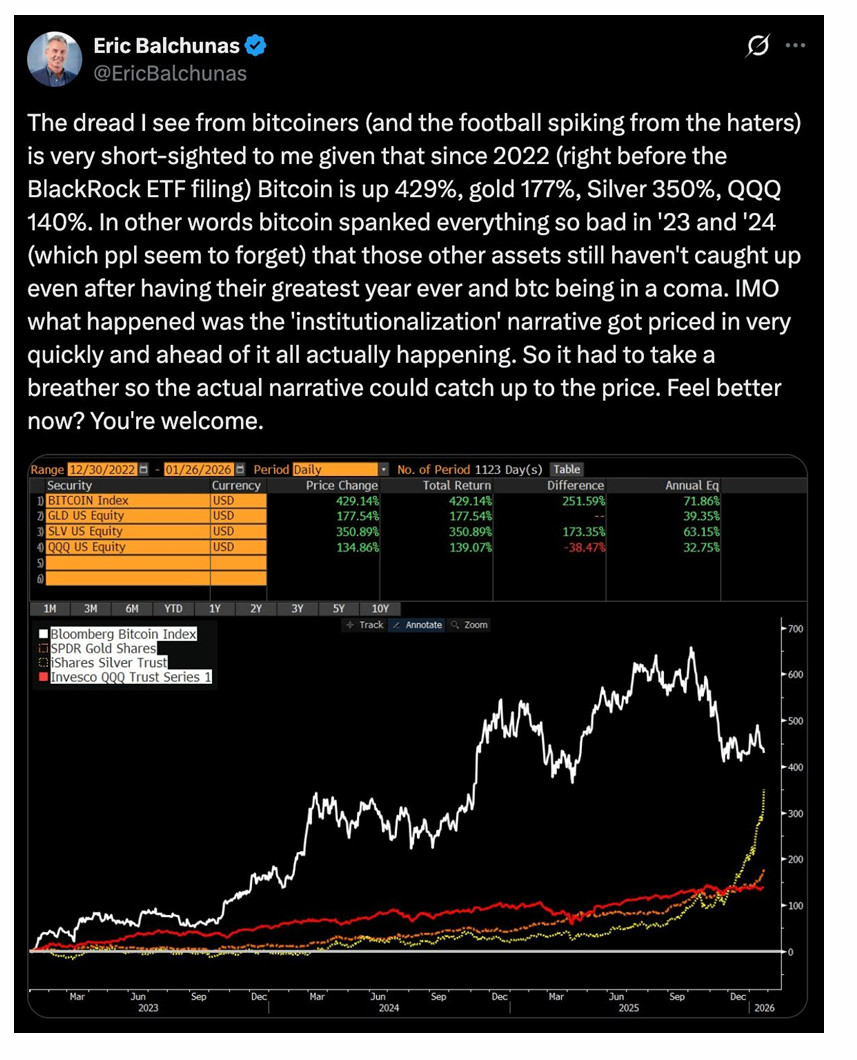
According to Bloomberg ETF analyst Eric Balchunas, since 2022, Bitcoin is up 429%, silver 350%, and gold 177%.
 You might also like:
