
Is an Economic Deluge Nigh?
By David Galland, Casey Research
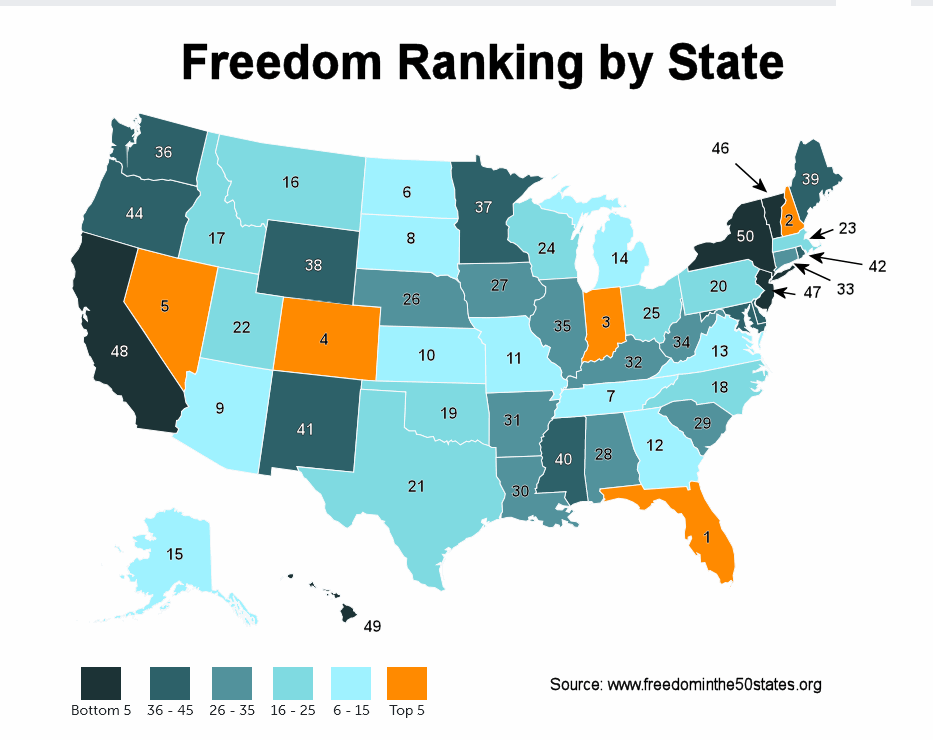
If history has taught one certain lesson, it is that the less fettered an economy, the better humankind is able to do what it does best: run from trouble and run toward opportunity. In this way mistakes are quickly resolved and progress assured.
Conversely, the deeper the muck of regulation, mandates, taxes, subsidies and other bureaucratic meddling, the slower we humans are in following our natural instincts until the point that progress is slowed or even stopped.
It is said that history doesn’t repeat itself, but it often rhymes. In the current circumstances, it appears that enough time has passed that current generations have completely forgotten the critical connection between the ability of humans to freely pursue their aspirations and economic progress.
You can see this ignorance in the popular demand for even more, not less, meddling in the affairs of humankind. Should this trend continue – and for reasons I will touch on momentarily, I firmly believe it will – then the aspirations of the productive minority will soon be dampened by ever higher taxes and other attempts to “level the playing field” and the global economy, already in tatters, will fall off the edge. Continue reading
US Financial System: Is It Finally Stable?
Bernanke comments raise questions about banks
Four years after we brushed up against “financial Armageddon,” did you think you’d be reading this?
Federal Reserve Chairman Ben Bernanke said…banks need to have more capital at hand in order to ensure the financial system is stable. Bernanke said regulators were taking steps to force financial institutions to hold higher capital buffers…
- Reuters, April 9
It appears our financial system is still not as stable as it needs to be. But guess who relaxed the banking system’s “capital buffers” in the first place? Continue reading
World-Wide Marginal Tax Rates
How does the U.S. Tax Rate compare with other countries?
Recently the people at Turbo-Tax created a great “info-graphic” comparing world-wide marginal income tax rates so we can see where we stand.
According to Wikipedia
A marginal tax rate is the tax rate that applies to the last unit of currency of the tax base (taxable income or spending)
In other words the marginal tax rate is the rate you will pay on the next dollar you earn. It doesn’t include other taxes like state taxes, sales taxes, property taxes etc. Based on this chart the U.S. compares pretty favorably on a tax rate basis when compared to other developed countries.
The Ascendence of Sociopaths in US Governance
By Doug Casey, Casey Research
An International Man lives and does business wherever he finds conditions most advantageous, regardless of arbitrary borders. He’s diversified globally, with passports from multiple countries, assets in several jurisdictions and his residence in yet another. He doesn’t depend absolutely on any country and regards all of them as competitors for his capital and expertise.
Living as an international man used to be just an interesting possibility. But few Americans opted for it, since the US used to reward those who settled in and put down roots. In fact, it rewarded them better than any other country in the world, so there was nothing pressing about becoming an international man.
Things change, however, and being rooted like a plant, at least if you have a choice, is a suboptimal strategy for surviving and prospering. Throughout history, almost every place has at some point become dangerous for those who were stuck there. It may be America’s turn.
For those who can take up the life of an international man, it’s no longer just an interesting lifestyle decision. It has become, at a minimum, an asset saver, and it could be a life saver. That said, I understand the hesitation you may feel about taking action; pulling up one’s roots (or at least grafting some of them to a new location) can be almost as traumatic to a man as to a vegetable. Continue reading
Obama: A One-and –Done President?
By the Editors of The Casey Report, Casey Research
President Obama promised to turn around the floundering economy that he inherited from his predecessor. He promised jobs. He promised transparency. Not only did he not deliver on those campaign promises, he has led the nation further into the abyss on all counts. Today we are less prosperous, deeper in debt, and enjoy fewer liberties than when Obama first stepped into the Oval Office. His own party is losing faith in the messiah.
You can see that loss of faith in the steady downward trajectory of Obama’s approval ratings. While Democrats can take heart from the fact that no truly viable candidate has emerged from the GOP, it’s clear that “Hope and Change” will not be sufficient to rally the electoral troops for Obama again in 2012. Voters are hurting, and Obama’s claims that the blame lies with George W. Bush no longer provide any solace.
Not only is the president’s own reelection in jeopardy, his sagging polls are dragging down other Democrat candidates as well. Republican Bob Turner handily took Anthony Weiner’s seat in New York’s 9th Congressional District, a district that had been a Democrat stronghold since 1923. New York’s 9th District has previously been represented by such Democrat stalwarts as Chuck Schumer and Geraldine Ferraro. During the special election for Weiner’s seat, Obama had only 31 percent approval in that district, although he won there with 55 percent of the vote in the 2008 presidential election.
A Democrat pollster attributed Turner’s win to “the incredible unpopularity of Barack Obama dragging his party down in the district.” Similarly, Republican Scott Brown took the Massachusetts seat that had been held by Ted Kennedy for almost 46 years. Brown’s win was attributed in large part to widespread discontent over Obama’s policies, particularly Obamacare. Continue reading
Doug Casey: Is a US-Iran War Inevitable?
Interviewed by Louis James, Casey Research
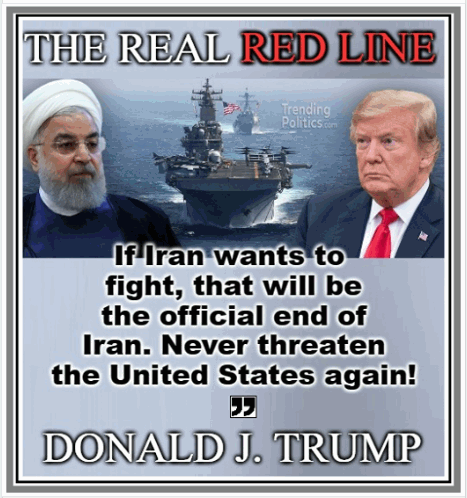
US-Iranian saber-rattling or impending shoot-out? In his usual, candid manner, contrarian investor Doug Casey talks about why he believes it’s serious this time… why the US is the greatest threat to peace today… why Iran might move towards a gold standard… and what smart investors should do.
L: Doug-sama, I’ve heard you say you think the US is setting Iran up to be the next fall guy in the wag-the-dog show – do you think it could really come to open warfare?
Doug: Yes, I do. It could just be saber rattling during an election year, but Western powers have been provoking Iran for years now – two decades, really. I just saw another report proclaiming that Iran is likely to attack the US, which is about as absurd as the allegations Bush made about Iraq bombing the US, when he fomented that invasion. It’s starting to look rather serious at this point, so I do think the odds favor actual fighting in the not-too-distant future.
L: Could they really be so stupid?
Doug: You know the answer to that one. We’re dealing with criminal personalities on both sides, and criminals are basically very stupid – meaning they have an unwitting tendency to self-destruction. One thing to remember is that most of those in power in the West still believe the old economic fallacy that war is good for the economy.
L: The old broken-window fallacy. Paraphrasing Arlo Guthrie, it’s hard to believe anyone could get away with making a mistake that dumb for that long. Continue reading
Want to Know Who’s Going to Be President? Ask the Stock Market
A recently-published, landmark research paper shows the link between stock market performance and presidential election winners.
What’s the biggest influence on the outcome of presidential elections?
Many observers would identify the role of campaign spending by super PACs, a candidate’s debate performance, and, of course, the health of the economy (“stupid”).
Yet if you want an answer backed by a large body of evidence, you’ll find one in the recently-published, landmark research paper by Robert Prechter, Deepak Goel, Wayne Parker and Matthew Lampert, titled “Social Mood, Stock Market Performance and US Presidential Elections.”
A lot of time, data analysis, and copious statistical evidence led them to this straightforward result: “Social mood as reflected by the stock market is a more powerful regulator of re-election outcomes than economic variables such as GDP, inflation and unemployment…”
In other words: If you want a good predictor for the result of an incumbent president’s re-election, look to the stock market.
Large amounts of earlier research have focused on stock performance after a presidential election. But very few scholars have reversed that order, to investigate a possible link between elections and preceding stock market performance. So reverse that order is what the authors did. What’s more, they’re the only ones to study the issue from a socionomic perspective — the premise that waves of social mood simultaneously drive the valuations of stocks and sitting presidents.
The group published their research on January 17, and it’s already getting attention. A Washington Post columnist read the paper and got its practical usefulness, by noting that Obama should benefit from a stock market that’s been mostly higher since 2008, while a Republican challenger “should hope the Dow crashes.”
You can read the entire research paper yourself by following this link >>
Trying to Eliminate Subsidies is a Losing Battle
There is an old story about a rich gentleman who was walking down the street one day when he comes upon a homeless man. The rich man felt pity for the man and decided to help him. He asked the homeless man how much he collected in a good day. The homeless man replied $50. The rich man told the homeless man that since he walked that way to work every day, if the homeless man were there on that street corner at 8:00 AM he would give him $50. And so that is what happened. Naturally the homeless man was happy to get the money. He no longer had to stand on the corner all day to get his $50. This went on for quite a while, every day the rich man would give the homeless man $50. But one day the rich man became ill and could not go to work and the homeless man did not have his $50 for the day. The next day when he arrived the homeless man demanded $100. since he hadn’t received his $50 from the day before. After all he was there at the appointed time it wasn’t his fault the rich man was sick. The rich man refused saying, he hadn’t been able to work so he didn’t earn any money the day before either…
The homeless man became angry and hit the rich man and took $100 from him.
The rich man called the homeless man ungrateful and decided walked to work a different way from then on.
History tells us that once a subsidy is instituted there will be riots if you try to remove them. Once people become used to getting something they feel entitled to it. If you try to stop the “entitlements” people become angry and riots ensue. We saw this in Greece and more recently in Nigeria. And it may become more widespread as governments try to cut back on expenses. In the following article our friends at Casey Research shed some additional light on the subject.
Tim McMahon~ editor
The Telling Tale of Nigeria’s Fuel-Subsidy Riots
The series of events that just transpired in Nigeria makes for a familiar tale – and a telling lesson. The tale tells of a poor, developing nation endowed with oil riches that, on the advice of international economists, tries to eliminate gas subsidies. The lesson is that the populations of oil-producing nations will inevitably erupt in rage against any such notions.
Nigeria is the biggest oil producer in Africa, pumping out 2.2 million barrels of crude oil a day to sit 10th in the global crude-production standings. But the average Nigerian gets little benefit from his country’s oil riches. There is an enormous gap between rich and poor in Nigeria, mostly because 80% of the economic benefits from producing all that oil flow to just 1% of the population. Politicians in the country’s infamously corrupt government have pocketed billions in oil profits, while three-fourths of Nigeria’s 160 million people live on about a dollar a day. Continue reading
The European Debt Crisis and Your Investments
A look back on 18 months of analysis and reports on the European Credit Crisis
In 1999, 11 European countries surrendered their currencies for the euro and a shared monetary authority. Barely a decade later, the once-celebrated EU is in the midst of a credit crisis and its currency is facing collapse.
Elliott Wave International’s analysts have been anticipating and tracking the credit contagion across the European nations for the past two years. EWI subscribers were first alerted to the still-developing European debt crisis back in December 2009.
The following is excerpted from a December 2010 report from The European Debt Crisis, a new report from EWI. This free report provides important analysis from February 2010 through today that helps you understand what the European economic crisis can mean for your investments. Plus, you’ll get a unique perspective on what’s ahead. Find out how to access this free report below.
The Credit Crisis Spreads — December 2010
The credit crisis is escalating as expected. Back in January 2010, when ratings agency Moody’s bestowed “investment grade” status on a widely followed index of sovereign bonds, The European Financial Forecast argued that a renewed Primary-degree decline would in fact aim the credit crisis directly at this critical new realm. Our case for the looming sovereign debt debacle rested primarily on two pieces of evidence: (1) Primary wave 3 (circled) had begun in Europe’s peripheral markets, and (2) premiums for credit-default swaps on European sovereigns (think of an insurance policy against a national default) were already signaling the next phase of the crisis by surpassing their 2008-09 price extremes. The February 2010 issue of EFF published a chart showing rising Greek, Spanish and Italian swaps and offered this description of how Europe’s credit crunch would escalate: “The theme during Primary wave 1 (circled) was default at the individual, corporate and quasi-government level. The theme for Primary wave 3 (circled) will be default at the sovereign level.”
Today, the credit crunch is clearly angling itself away from mere corporations and toward whole countries. On November 15, Bloomberg announced the escalation with this headline: Continue reading
Doug Casey Addresses Getting Out of Dodge
(Interviewed by Louis James, Editor, International Speculator)
L: Doug, a lot of readers have been asking for guidance on how to know when it’s time to exit center stage and hunker down in some safe place. Few people want to hide from the world in a cabin in the woods while life goes on in the mainstream, but nobody wants to get caught once the gates clang shut on the police state the US is becoming. How do you know when it’s time to go?
Doug: Well, the first thing to keep in mind is that it’s better to be a year too early than a minute too late. David Galland recently read They Thought They Were Free: The Germans, 1933-45, by Milton Mayer. He quoted a passage in his column of last Friday. It goes a long way in explaining why Americans appear to be such whipped dogs today. They’re no different from the Germans of recent memory. For those who missed it, let me quote it: Continue reading