Government

Drowning in Red tape

Bureaucracy: The Red Tape that Prevents Economic Growth

Argentina’s “Chainsaw policy” shows how stifling red tape and bureaucracy can be and how beneficial eliminating it can be. Two months after Milei assumed the presidency, nine thousand state jobs had been eliminated, and by the end of March fifteen thousand layoffs had been ordered. Furthermore, when Javier Milei spoke at the IEFA Latam Forum, he mentioned that seventy thousand contracts of public employes were going to be canceled. He also mentioned that two hundred thousand social programs were eliminated, and public works were also eliminated.
Not surprisingly, the state has not only not collapsed, but it has experienced its third consecutive fiscal surplus, showing unequivocally to the world that the excessive state bureaucracies do nothing but harm.

Bureaucracy: The Red Tape that Prevents Economic Growth Read More »

Maui Wildfire

What Made Maui’s Lahaina Fire So Deadly?

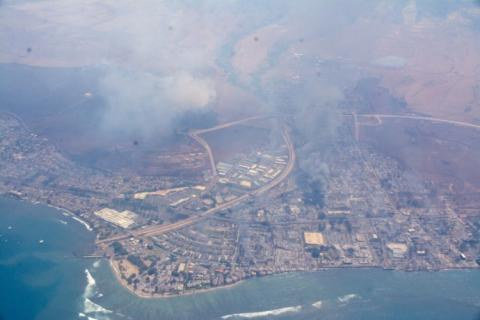
To review, a power company shielded from competition by the state placed electrical infrastructure among highly flammable state-owned grass fields above the historic city of Lahaina, which the government was twice warned were highly susceptible to fire. And once a fire broke out, a combination of defective water infrastructure, terrible communication by government officials, and only one escape route doomed the people of Lahaina to the worst wildfire experienced in this country in over a hundred years.

What Made Maui’s Lahaina Fire So Deadly? Read More »

Crumbling Fractional Reserve Bank

Is this the End of Fractional Reserve Banking?

In the following article Douglas French looks at the shaky Fractional Reserve Banking system that has been around since it was created by the Banking Act of 1933 (aka. the Glass-Steagall Act), which also created the Federal Deposit Insurance Corporation (FDIC). Will Fractional Reserve Banking survive to celebrate its Centennial anniversary?  Recent trends in Idaho (of all places) could spell the end of fractional reserve banking (but not the FED).

Is this the End of Fractional Reserve Banking? Read More »

Central Bank Digital Currency

Is it Really Paranoid to Worry about a Central Bank Digital Currency?

Recently there has been talk about the FED creating a Central Bank Digital Currency (CBDC). A CBDC is similar to a cryptocurrency, except that its value is set by the central bank and equivalent to the country’s fiat currency. Some countries like Venezuela have already tried a National Cryptocurrency in an effort to solve their inflation problem, but since the same guys are pulling the levers, it worked out about as well as you would expect.

Is it Really Paranoid to Worry about a Central Bank Digital Currency? Read More »

Red and Blue States

Do “Red States” Ride the “Blue State” Gravy Train?

When Congresswoman Marjorie Taylor Greene called (again) for “national divorce” this week, a common retort among her detractors on Twitter was to claim that so-called red states are heavily dependent on so-called blue states to pay for pretty much everything. Reporter Molly Knight claimed, for example, that “Red states get their money for roads and cops and schools from blue states. You cut off that gravy train and you e [sic] got a third world country.”

Do “Red States” Ride the “Blue State” Gravy Train? Read More »

Countries splitting

Are Countries Getting Smaller?

In the following article Ryan McMaken talks about “States,” but he uses the term in the classical sense meaning “country,” not in the way we in the United States tend to think of the term. He tells us that the number of states has almost tripled since 1945. This is due to countries splitting into smaller units. A classic example is the Soviet Union breaking up into its smaller components. Other examples are the breakup of Yugoslavia, North and South Korea, and North and South Vietnam. There is even occasional talk of Quebec splitting from the rest of Canada due to language and cultural differences. So there is definitely a trend in place toward smaller countries. Today Ryan is looking at the political consequences of smaller, more localized units of government.

Are Countries Getting Smaller? Read More »

Champs Missile

U.S. Develops New “Humanitarian” Missile That Doesn’t Kill People

Basically, CHAMP is a cruise missile which can be loaded on a B-52 bomber but it doesn’t actually explode. Instead, the CHAMP missile is launched and flies over an area emitting an electromagnetic pulse which destroys all the electronics within its target zone. This includes cameras, cellphones and computers. But more importantly it also includes military hardware like surveillance systems, artillery guidance systems, and radar systems.  depending on your perspective, it may sound crazy, dystopian, or maybe just like Sci-Fi but it is a real functional weapon. Although it was originally tested way back in 2012 this weapon is now a reality. It is called, CHAMP which stands for Counter-Electronics High Power Microwave Advanced Missile Project and the U.S. has deployed 20 of them.

U.S. Develops New “Humanitarian” Missile That Doesn’t Kill People Read More »

Scroll to Top