
General

Financial Warfare

The Evolution of Economic Warfare and the Oil Weapon

To understand why financial warfare and the oil weapon is so common, you must understand how it came into existence and what it has achieved. The oil weapon first came into existence in 1965, when Egypt nationalized the Suez Canal. What resulted from this was a declaration of war by France, England, and Israel. As a way to counter this invasion, Saudi Arabia decided to ban exports to England and France. Although this embargo turned out to have minimal economic impact, it was a beginning.

The Evolution of Economic Warfare and the Oil Weapon Read More »

Governments Around the World Outlawing Cash

Recently, France decided to crack down on those people who make cash payments and withdrawals and who hold small bank accounts. In 2011 Italy began working to end the right of landlords, tradesmen, and small businesses to perform large transactions in cash. Spain has outlawed cash transactions over €2,500. In Sweden, the use of cash is being steadily eliminated. Denmark’s central bank, Nationalbanken, has another justification for ending its use of banknotes—producing paper money and coinage is not cost effective. Israel also seeks to end the use of cash. A 2012 law in Mexico bans large cash transactions, with a maximum penalty of five years in prison. In 2014, Uruguay passed the Financial Inclusion Law, which limits cash transactions to US$5,000. And In the US, federal law requires banks to file a “suspicious activity report” (SAR) on their customers whenever a customer requests a suspicious transaction. (In 2013, 1.6 million SAR’s were submitted.) As to what may be deemed “suspicious,” it may be any transaction of $5,000 or more, but it may also mean a series of transactions that, together, exceed $5,000.

Governments Around the World Outlawing Cash Read More »

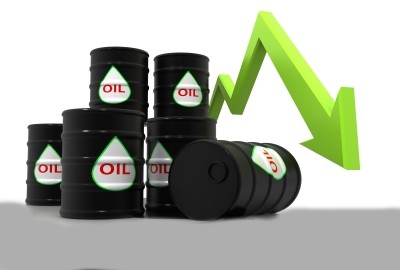
Will Oil Return to $100 or Drop to $10?

If you have been following the price of oil over the last few months, chances are you’re a little confused. On the one hand, you have the likes of A. Gary Shilling who, in this Bloomberg article, loudly trumpets the prospect of oil at $10/Barrel, and on the other hand there is T. Boone Pickens, who, at the end of last year was predicting a return to $100 within 12-18 months.

Will Oil Return to $100 or Drop to $10? Read More »

Interest Rates

How’s the Wealth Effect Really Doing?

The wealth effect has been used as a justification for quantitative easing and a root cause of consistent overly optimistic growth expectations by the Federal Open Market Committee. The Fed’s over reliance on the so-called “wealth effect,” is a major cause of this optimism and consistently wrong projections. The wealth effect says that an increase in consumer wealth, through higher stock prices or home values will lead to increased consumer spending.

Research suggests that the concept of a wealth effect is in fact deeply flawed. It is unfortunate that the FOMC has relied on this flawed concept to experiment with over $3 trillion in asset purchases and continues to use it as the basis for what we believe are overly optimistic growth expectations.

How’s the Wealth Effect Really Doing? Read More »

Golden Oldies

There is an old saying, “Those who do not study the past are condemned to repeat it” and another that goes along with it which says, “History may not repeat itself but it does rhyme.”
Recently I came across some articles that we published quite a few years ago but I thought they were worth mentioning again in an effort to learn from the past. So here they are:

Golden Oldies Read More »

Current Trends in Asbestos Litigation

Asbestos litigation has been a hot topic since asbestos was banned in 1977.  For more than 30 years new cases have continued to be diagnosed. As more and more cases of asbestos continue coming in, the trend in asbestos litigation in the United States is on the rise, with respect to average settlements, costs, attorney’s fees, and outside financing. Those who have been exposed to asbestos and suffered, as a result, may be entitled to compensation for pain and suffering, hospital bills, and lost wages.

Current Trends in Asbestos Litigation Read More »

Offshore Oil Rig Fracking

New EPA Rule Requires Chemical Disclosure for Offshore Fracking

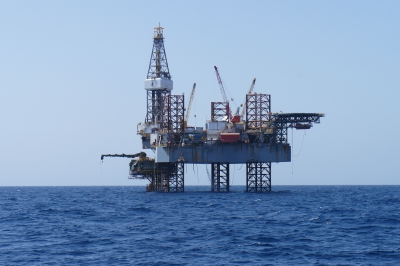
The environmental impact of “fracking” has been the subject of some debate in recent years. It is the process of pumping water and some other agents into oil wells under pressure in an effort to open cracks in the rock and allow the oil and gas to get out. This process is largely responsible for the massive expansion in U.S. natural gas production allowing us to approach energy independence. So oil companies are very protective of the technology. Environmentalists on the other hand have ascribed everything from water pollution, drought and earthquakes to the process. In today’s article, we will look at a new wrinkle to the fracking debate relating to off-shore fracking.

New EPA Rule Requires Chemical Disclosure for Offshore Fracking Read More »

Scroll to Top