
How Do Import Duties Compare to Income Taxes?
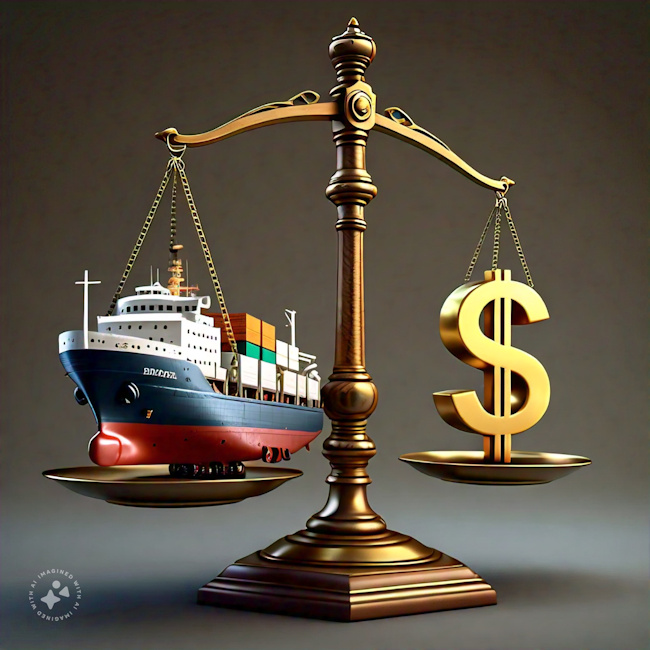 This question was addressed by PHD Economist Valerie Rhea in a recent Quora post. The following was her response. And from it we can see that the question is like asking a condemned man, Which do you prefer, to be hung or shot?
Are some forms of taxation worse than others for the economy? Isn’t it largely a zero-sum game? Specifically, do import duties do less damage than income tax?
At a very broad level, the private sector is the engine of all economic activity and prosperity in any free market society. Government provides certain services, and in exchange, we trade away some of our economic prosperity to fund these government services.
In modern America, the vast majority of what government provides is nothing but wealth redistribution – government takes from some and gives to others it deems more worthy. 70% of US government spending is this type of wealth redistribution, and the more we do, the less prosperity we have…
It should be obvious that government can’t take away from the more productive parts of society and give to the less productive parts of society without causing a decline in prosperity.
From the above, it should be clear that taxation generally is bad for the economy… this is why virtually every administration that’s tried them has found tax cuts to be stimulative to the economy, going all the way back to at least JFK.
Now, as the question suggests, there are different ways government takes resources out of the private sector, and they all have different characteristics regarding exactly who they harm. Business taxes, for example, tend to make US firms less competitive with overseas firms who might not pay as much in taxes. Income taxes tend to be “progressive” in the sense that more affluent people pay a higher share of taxes. Excise taxes – fuel taxes and so on – tend to be regressive in that they can hurt poor Americans more. And tariffs tend to hurt US consumers by driving up the price of foreign goods.
So really it’s not so much that there are “good” taxes and “bad” taxes…it really just comes down to who you want to put in the crosshairs.
This year, Kamala Harris wants to put affluent Americans and businesses in the crosshairs. What she doesn’t explain to her supporters is that when you take from these segments of society, what you get is lower economic growth, fewer jobs, and less prosperity. The poor and middle-class that might be Harris supporters don’t understand that while they may not see their income taxes rise, they are likely to still pay in other ways.
The point that’s lost in this debate is the focus on the spending side of the equation. America would benefit from a debate on exactly how much “we the people” should be spending to govern ourselves. Today, we spend 38% of all that we produce as a country on our government…is this the right number?
I can tell you as an economist, if a firm spent 38% to manage itself, that firm would quickly find it impossible to raise capital or attract investors…a well-managed private sector firm tends to spend 6–10% to govern itself, not 38%. Indeed, the US of 1900 spent 6% of GDP on government…what happened in the past 120 years that allowed government to consume so much more of the economy?
The answer is simple: progressive politics. But few seem to understand that, and fewer still seem to understand that no matter what we tax, there is no solution that can keep up with our growth in spending. Since 2008, Federal spending has been up at an annualized 6.5% rate, but our economy has only grown by an average of 2.5%. It should be common sense, but you cannot sustainably let government grow more than twice as fast as the economy that supports it – no matter what you tax, eventually the day of reckoning hits when government devours so much that the economy simply collapses.
Thus, the right answer is that there are different pros and cons of each type of tax, but the better approach is to get spending under control so that we need neither.
Image Created by Meta A.I.
Other Articles You Might Like:
