China’s Monetary Bazooka
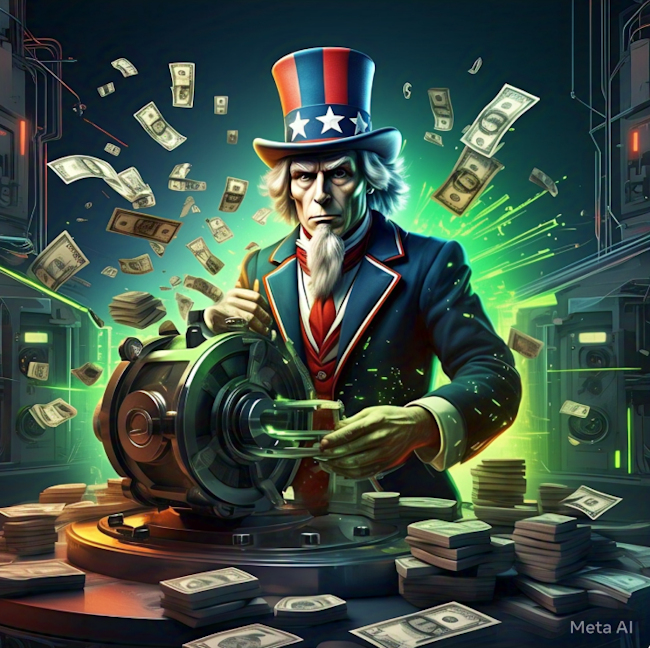
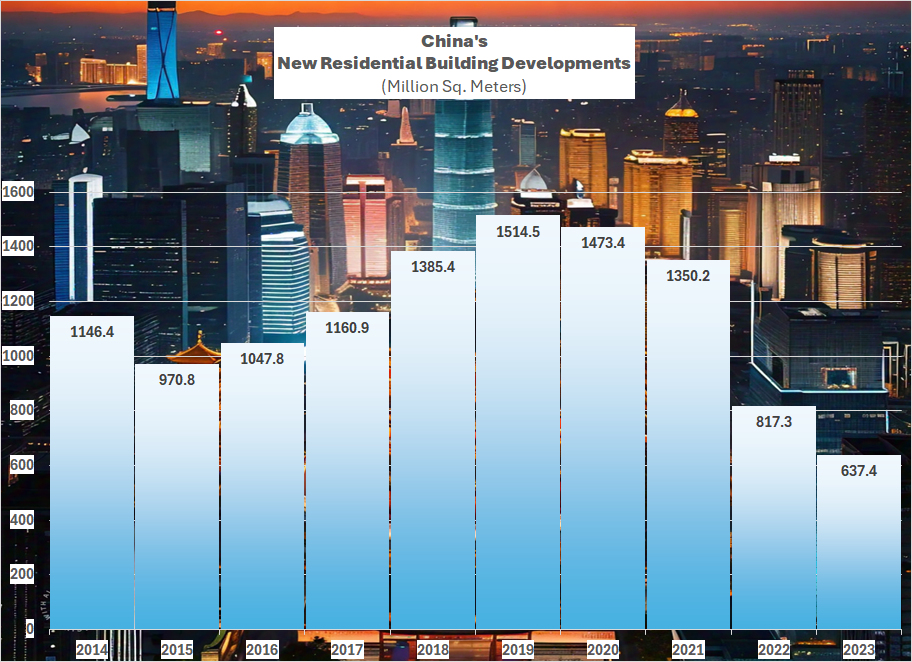
The Chinese Monetary Bazooka– China has unleashed a monetary liquidity bazooka in an attempt to re-inflate not only Chinese Real Estate but also the Chinese Stock Market.
China’s Monetary Bazooka Read More »
The Chinese Monetary Bazooka– China has unleashed a monetary liquidity bazooka in an attempt to re-inflate not only Chinese Real Estate but also the Chinese Stock Market.
China’s Monetary Bazooka Read More »
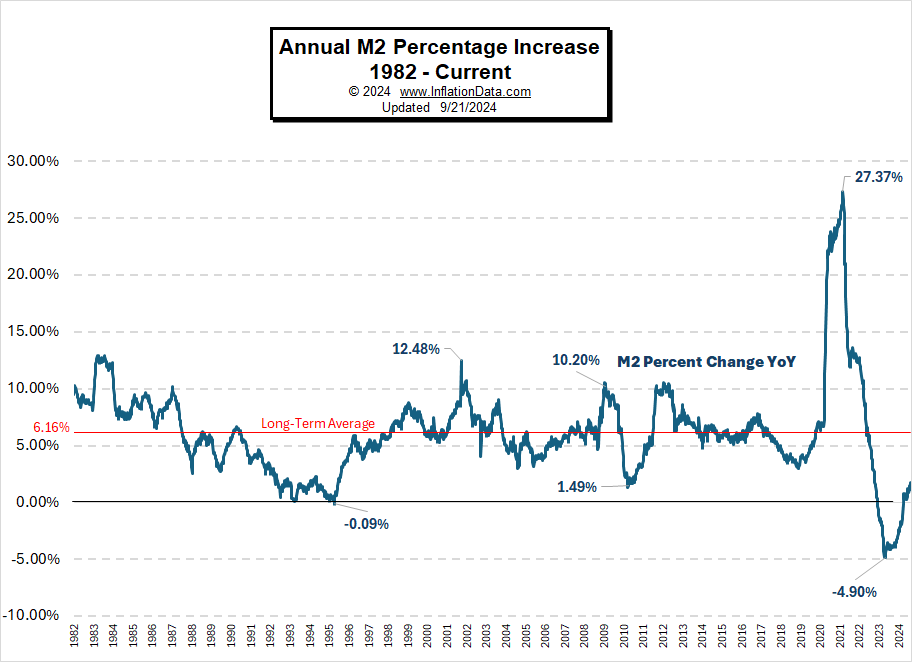
The “M2 money supply” includes liquid assets such as Cash, Checking Accounts, Savings Accounts, CDs, etc.
Looking at the chart below we can see that the M2 money supply increased gradually for many years until the pandemic when it shot up drastically, and then in 2022 the FED significantly decreased the money supply for the first time. But over the last year or so it appears to be resuming its previous uptrend.
How Much is the Money Supply Growing? Read More »
Gold has reached all-time highs not only in nominal terms but by other measures as well. Is it overpriced now? What about Oil?
Is Gold Overpriced? Read More »
All taxation is generally bad for the economy…this is why virtually every administration that’s tried tax cuts has found them to be stimulative to the economy, going all the way back to at least JFK. Now, as the question suggests, there are different ways government takes resources out of the private sector, and they all have different characteristics regarding exactly who they harm.
Are Some Forms of Taxation Worse Than Others for the Economy? Read More »
In 301 AD, Roman emperor Diocletian implemented price ceilings on over 1,200 goods… The English translation of Diocletian’s edict is fun to read. It shows that not much has changed in politics over the millennia… now a new war must be waged against greed…
Are Price Controls a Good Idea? Read More »
Transferring goods from the private sphere to the public sphere is not the harmless conversion that MMT proponents and other lovers of big government imply. When they say that they only want to make a few more goods public, what they’re not saying is that those goods will likely, if not certainly, be used to serve far fewer consumers and to satisfy far less urgent and valuable wants.
Modern Monetary Theory (MMT) Read More »
Canada’s standard of living is on track for its worst decline in 40 years, according to a new study by Canada’s Fraser Institute.
The study compared the three worst periods of decline in Canada in the last 40 years — the 1989 recession, the 2008 global financial crisis, and this post-pandemic era.
They found that unlike the previous recessions, Canada is not recovering this time. Something broke.
One in three Canadians work for the government, making 30% more salary than the average taxpayer. Roughly 10% of Canadians are on welfare.
Canada’s Economic Crisis Read More »
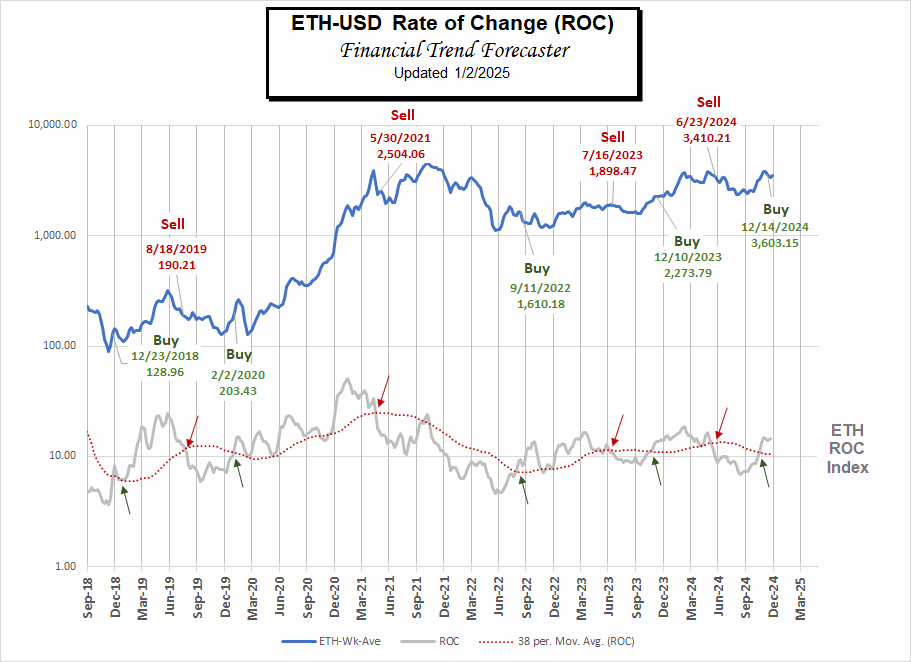
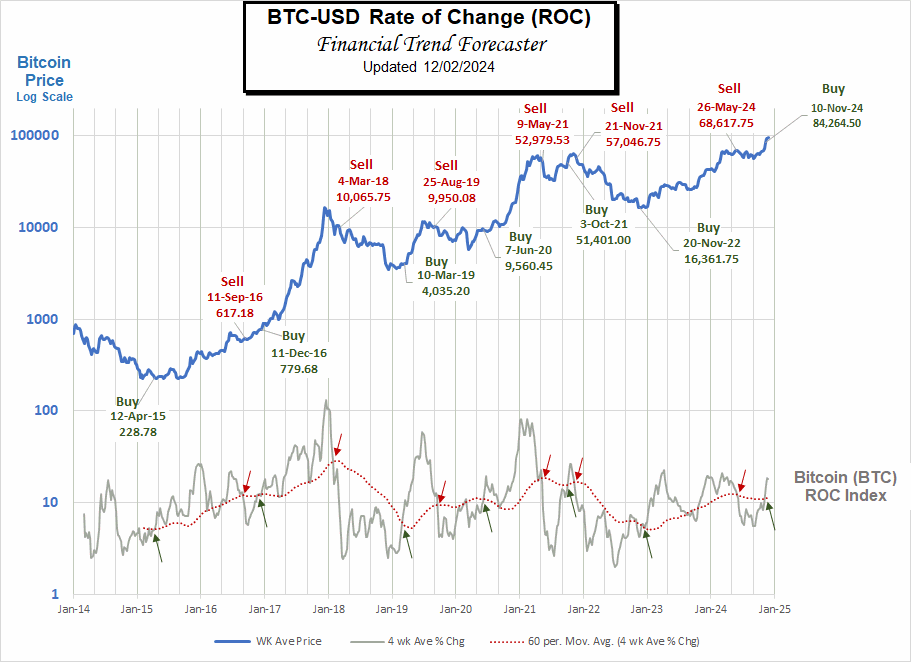
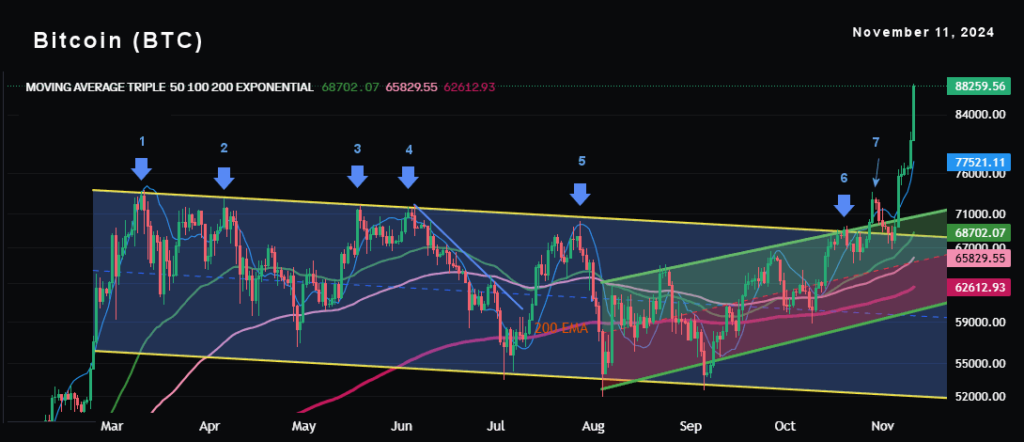
Everyone knows that the Crypto market is volatile. And we got another dose of that on the 4th of July. But rather than fireworks, Crypto markets crashed. The year 2024, started out very bullish for Crypto, with Bitcoin (BTC) up sharply… partly due to BTC getting approval for ETFs and partly due to the expected halving which would cut supply. But so far this year, the truism “Buy the rumor, Sell the news” has held for the Bitcoin halving.
Crypto: Crash or Opportunity? Read More »
Argentina’s “Chainsaw policy” shows how stifling red tape and bureaucracy can be and how beneficial eliminating it can be. Two months after Milei assumed the presidency, nine thousand state jobs had been eliminated, and by the end of March fifteen thousand layoffs had been ordered. Furthermore, when Javier Milei spoke at the IEFA Latam Forum, he mentioned that seventy thousand contracts of public employes were going to be canceled. He also mentioned that two hundred thousand social programs were eliminated, and public works were also eliminated.
Not surprisingly, the state has not only not collapsed, but it has experienced its third consecutive fiscal surplus, showing unequivocally to the world that the excessive state bureaucracies do nothing but harm.
Bureaucracy: The Red Tape that Prevents Economic Growth Read More »
Mainstream financial news today is replete with stories about “distress” in the commercial real estate market. But what is the precise nature of this distress, and what implications does it have for those outside of the respective industry or asset class? More importantly, what set of factors contributed to the distress, and what does that say about its potential alleviation?
Broadly, “distress” in the commercial real estate context refers to the inability of a property, or portfolio of properties, to make required payments on the underlying loan (to “service debt,” in industry terms). There is also physical distress—lack of physical upkeep, accumulation of deferred maintenance, etc.—but the inability to service debt is what’s generally referred to as distress in the financial media. I’ll refer to this as financial distress and focus on it as the more relevant driver of immediate and material negative implications for owners and investors.
In the following discussion, I’ll draw on my previous experience in the hospitality and core commercial real estate industry—specifically, my involvement in restructuring, recapitalization, and various other forms of dealing with financially distressed assets in the wake of the 2008–9 crash. I’ll also use my current role as the founder of a private equity real estate company focused on apartments to expound on the current issues in that specific industry. Throughout, I will highlight connections between financial distress and economic management by government at the expense of the free market.
How Washington and the Fed Caused the Commercial Real Estate Crisis Read More »